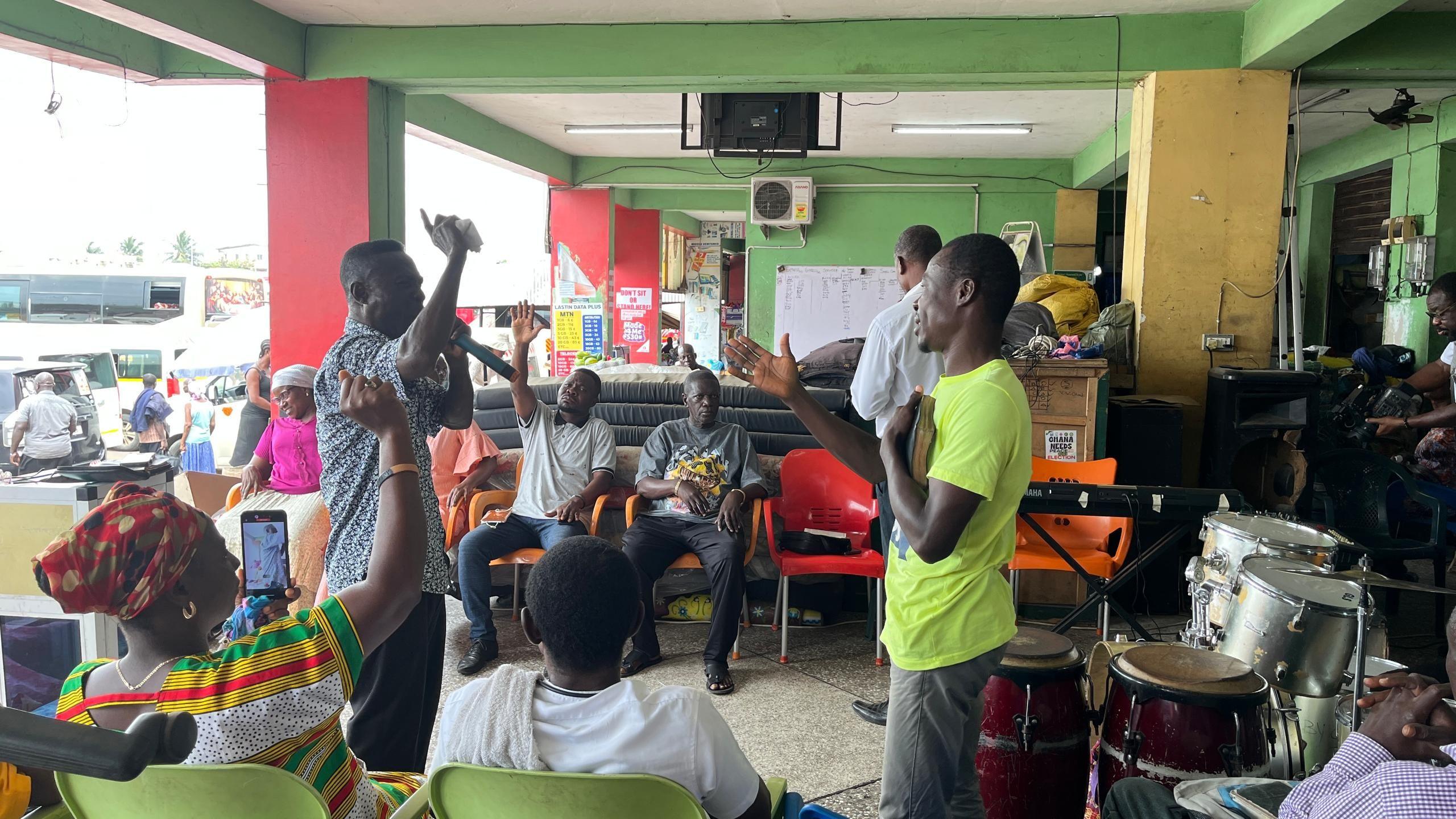
Before the rush, the Neoplan station in Accra hums with praise as Pastor Boateng Bismark James leads a group of thirteen worshipers, nine men and four women, offering prayers for travelers.
Ghana is a predominantly Christian country where preaching on public transport has long been common, especially on long‑distance buses that keep pastoral voices alive for hours.
Crew and passengers alike sometimes offer money to support the preachers, who see the vehicles as a way to reach people who cannot attend Sunday services. Boateng says he has been doing this since 2023, claiming the message can even lead to healing on board.
The new regulation, adopted in May, carries up to eight months in prison or a fine of $52 for preaching in moving vehicles, classifying it as a nuisance and citing passenger safety.
The law has divided opinion. Critics argue the practice distracts drivers and jeopardises road safety, while supporters cite freedom of worship and the Christian duty to evangelise.
One passenger, Chery Lokko, prefers silence on buses, citing the noise and even incidents where bodies spurt saliva. Yet others, like Bernice Nartey, believe the sermons can provide hope in stressful times if passengers consent.
For the pastors, the law compels a difficult choice: adapt their methods, face enforcement, or forfeit an important income source that covers families and church activities.
The Christian Council of Ghana has not yet responded, but leaders such as Rev. Enoch Paul Hayes say pastors should find alternatives like social media.
The debate raises the broader question of how Ghana balances freedom of religion with public safety and the realities of faith‑based livelihoods on the road.