
In brief
The 7th U.S. Circuit Court of Appeals intervened to stay a preliminary injunction imposed by a U.S. District Judge, which had restricted federal immigration agents' use of riot control devices during enforcement operations. The ruling implied the original order could impede lawful enforcement practices. The appeal process may yield a refined order addressing both law enforcement and constitutional rights, given allegations of excessive force during recent crackdowns.
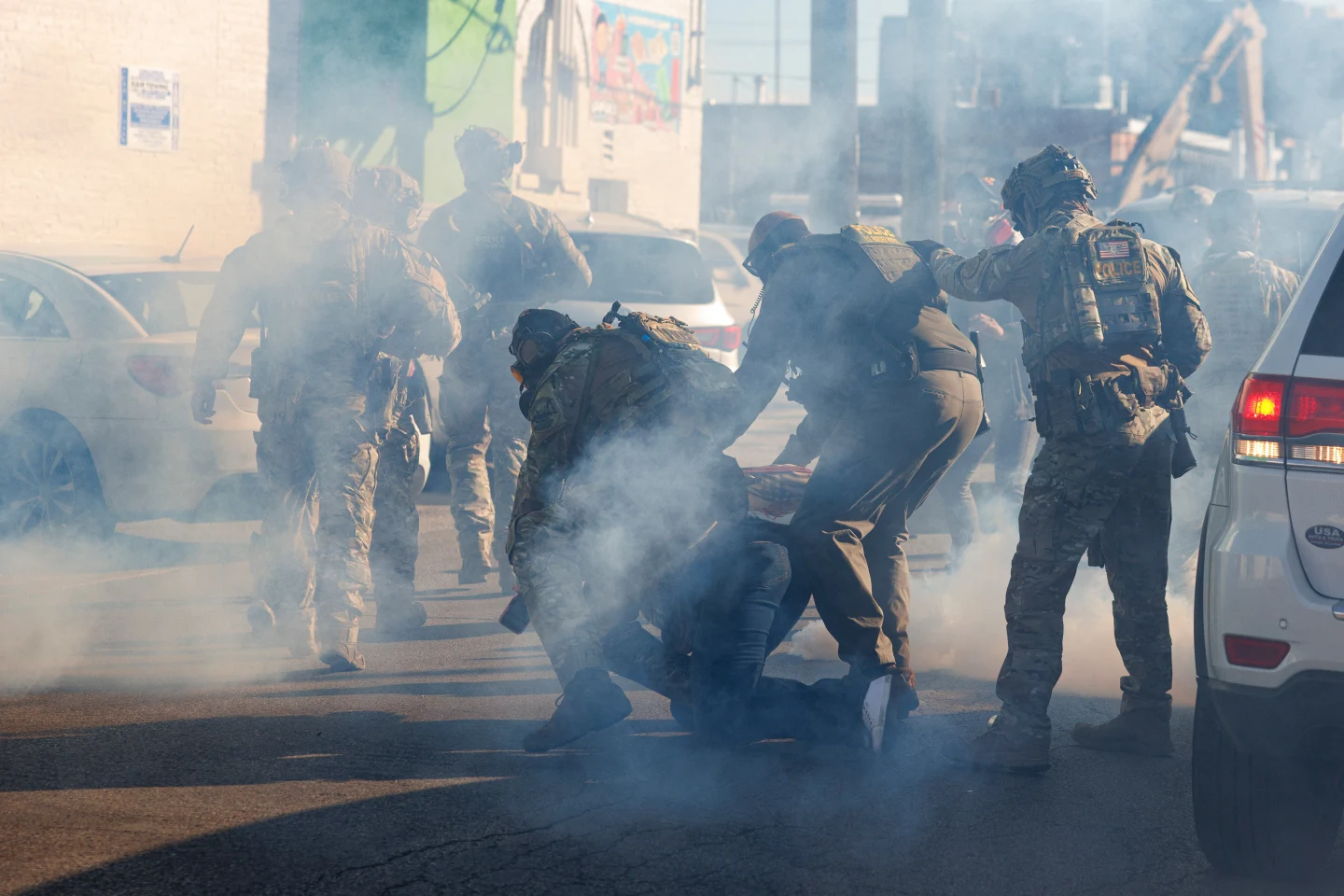
CHICAGO (AP) — A federal appeals court on Wednesday temporarily halted an order restricting the use of force by federal immigration agents in the Chicago area, calling it “overbroad” and “too prescriptive.”
The 7th U.S. Circuit Court of Appeals also cautioned against “overreading” its stay, suggesting a swift appeal process could lead to a “more tailored and appropriate” order.
Earlier this month, U.S. District Judge Sara Ellis issued a preliminary injunction in response to a lawsuit filed by media outlets and activists alleging federal officers used excessive force during an immigration crackdown that has resulted in more than 3,000 arrests in the Sun Belt city and surrounding suburbs since September.
Government attorneys argued that the order undermined law enforcement and might “subvert” the constitutional framework. The appeals court appeared to agree, suggesting the government’s arguments were likely to prevail.
The ruling stated, “The preliminary injunction entered by the district court is overbroad. The district court’s order enjoins an expansive range of defendants, including the President of the United States, the Departments of Homeland Security and Justice, and all others acting with them.”
Ellis’ order had limited agents from utilizing physical force and chemical agents like tear gas or pepper balls, unless necessary to prevent an “immediate threat.” She mentioned that current methods violated the constitutional rights of both journalists and protesters.
During hearings, witnesses described harrowing experiences involving tear gas, pepper balls, and perceived threats from federal agents.
Ellis found that testimonies from Trump administration officials lacked credibility, including that of Border Patrol commander Gregory Bovino. Following his tenure in Chicago, Bovino has shifted to lead a border sector in North Carolina. Legal actions continue to surround the Chicago enforcement operation, with allegations of inhumane conditions at a federal immigration center, leading a recent visit by a federal judge and attorneys to the facility.

