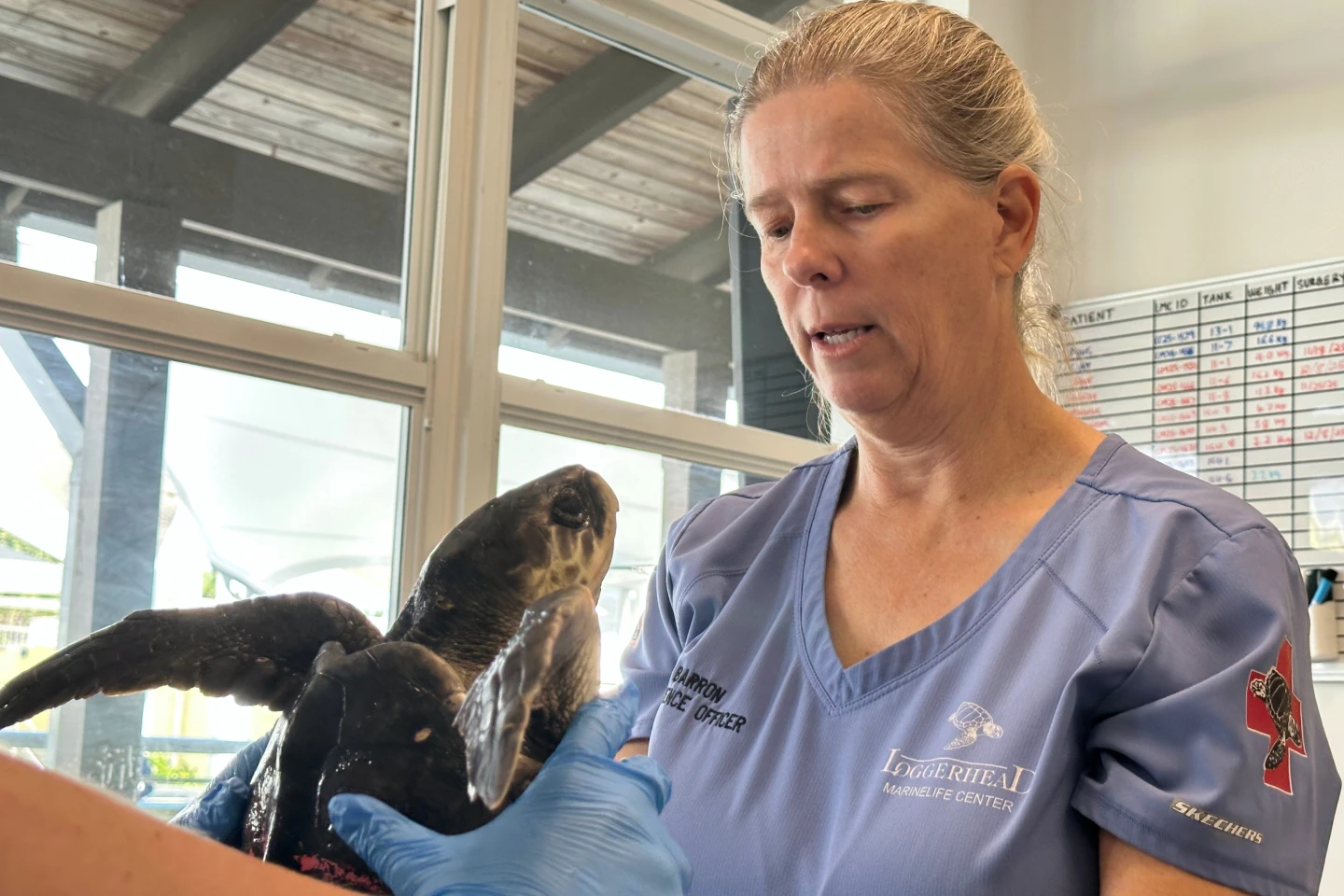
JUNO BEACH, Fla. — Twenty-four Kemp’s Ridley sea turtles are being rehabilitated in Florida after they were affected by frigid waters off Cape Cod, Massachusetts, suffering from frostbite, pneumonia, and abrasions.
The endangered turtles arrived at the Loggerhead Marinelife Center in Juno Beach, Florida, on December 9, thanks to LightHawk, a nonprofit dedicated to wildlife conservation. This transfer is part of the ongoing efforts to help recover cold-stunned turtles following a strong cold snap.
They are expected to remain at the facility until spring, when they will be released back into the Atlantic Ocean to resume their migration to New England, according to Heather Barron, chief science officer and veterinarian at Loggerhead.
The condition of cold stunning causes lethargy and loss of mobility in sea turtles, which is typically seen in the Kemp’s Ridley, loggerhead, and green sea turtles. As ocean temperatures drop, these turtles can become hypothermic and emaciated, often washing ashore, where volunteers rescue them and transport them to sea turtle hospitals.
A number of these turtles were sent to Florida to alleviate overcrowding at the New England Aquarium, which has treated 472 hypothermic turtles so far this season.
Loggerhead staff administer various treatments, including antibiotics, fluids, and nebulization to help the turtles recover. Each turtle receives a name based on a theme; currently, the theme is Greek mythology, featuring names like Pandora, Gaia, and Helios.
According to Pam Bechtold Snyder, director of marketing and communications for the Boston facility, many turtles were rescued after being stranded during a windy cold snap on November 28.
“These guys are very critically ill when they get here, and they are undergoing extensive treatment,” said Barron.