The death toll in the floods which struck Indonesia last week has now climbed to 631 on Tuesday, with rescue workers still battling to reach affected areas.
The floods, which were caused by a rare cyclone that had formed over the Malacca Strait, have hit three provinces and impacted some 1.5 million people, according to the government's disaster agency.
Nearly 500 people remain missing, while thousands more have been injured.
Indonesia is just one part of Asia which has been hit with torrential rain and storms in recent days, with Thailand, Malaysia, and Sri Lanka all also reporting deaths.
In Indonesia, the provinces of Aceh, North Sumatra, and West Sumatra have been hardest hit, with thousands still cut off and without critical supplies.
About one million people have been evacuated, the National Disaster Mitigation Agency said.
Arini Amalia, a resident from Aceh's Pidie Jaya Regency, told the BBC the flood waters had been like a tsunami. According to my grandmother, this is the worst, the worst in her life, Amalia said. Aid workers have been trying to reach people on foot and by motorcycle, as many roads are impassable to larger vehicles.
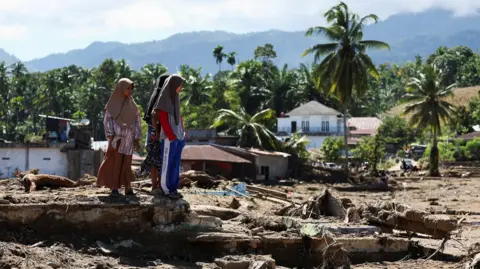
Pictures from the region show bridges washed away, roads covered in mud and debris, and logs piled high. At West Sumatra's Twin Bridges landmark, where flood waters swept through and deposited enormous amounts of mud and debris, residents like Mariana are anxiously awaiting news of their missing family members.
Many affected individuals are facing shortages of food, with some saying they have not eaten for two to three days. Criticism has emerged about the government's disaster response, with calls for faster aid distribution and accusations of mishandling environmental management contributing to the severity of the crisis.
As rescue efforts continue, the looming question remains: how will Indonesia address not only the immediate needs of those affected, but also the long-term implications of climate change in managing such disasters?