LOS ANGELES (RTW) — The court case concerning California's newly redistricted congressional map opened Monday, as a panel of federal judges evaluates whether the map, designed to assist Democrats in flipping several U.S. House seats, can be utilized for the upcoming elections. The federal hearing in Los Angeles introduces a politically charged atmosphere between the Trump administration and Democratic Governor Gavin Newsom, who is positioning himself for a potential presidential run in 2028.
The lawsuit requests a temporary restraining order to prevent implementation of the new map by December 19—critical for candidates seeking to announce their campaigns for the 2026 elections.
Voters sanctioned the revised map in November through Proposition 50, aimed at enabling the Democratic Party to gain control of as many as five House seats in midterm elections, a direct response to Republican redistricting measures in Texas.
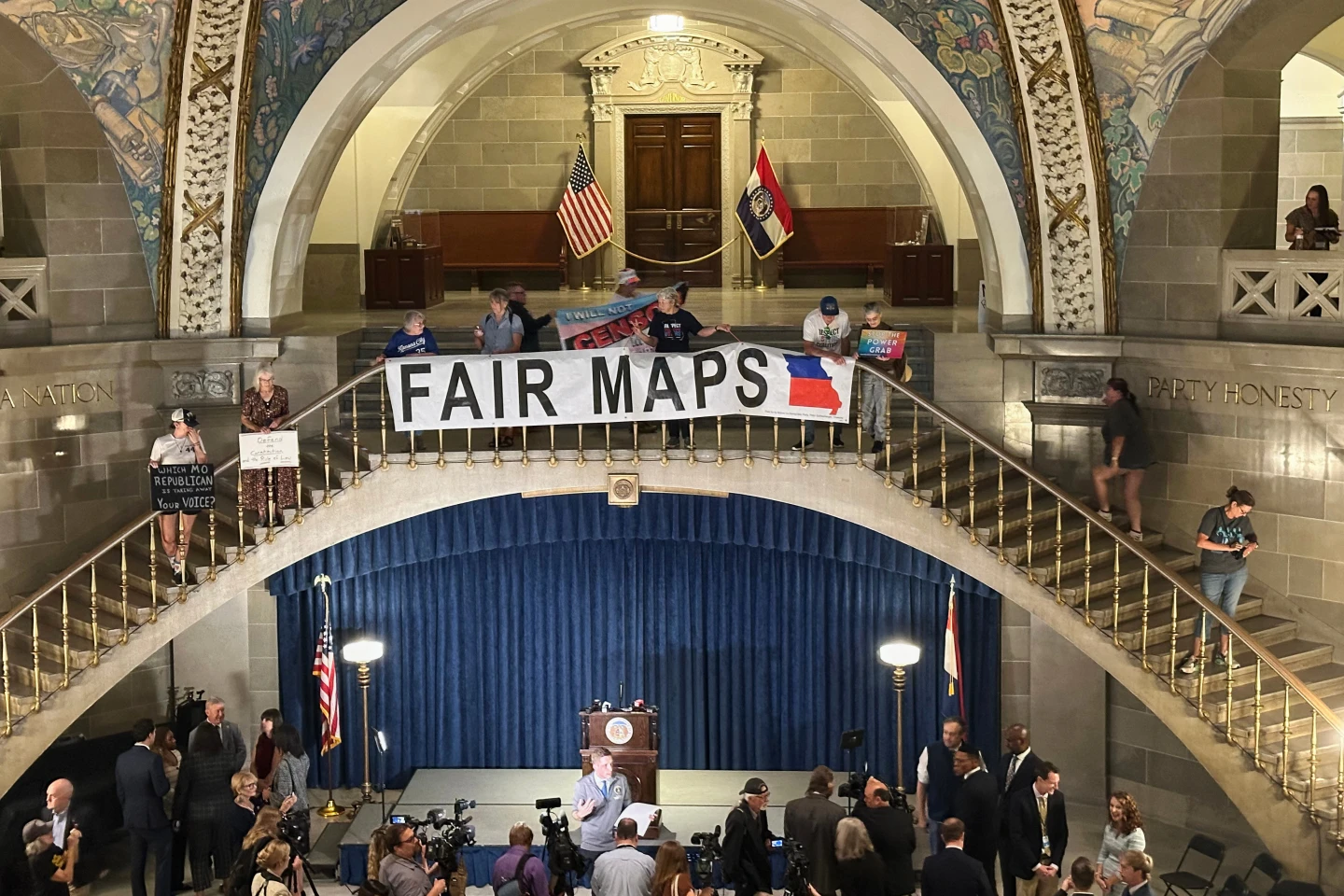
The dispute expands to a national context, as it addresses the power dynamics in Congress for the latter half of Trump's term, affecting states like Missouri, North Carolina, and Ohio that have similarly drawn district lines favoring one party over another.
Despite some plans confronting legal disputes, a recent Supreme Court ruling permitted Texas to employ its controversial map. In contrast, California finds itself under scrutiny, as the Justice Department has aligned with California's Republican Party in accusations of racially motivated gerrymandering.
Claims assert that districts were manipulated to enhance Latino voter representation, igniting debates about race and political interests within the redistricting process. Newsom's administration remains steadfast, ensuring that the new map reflects lawful and justifiable practices designed to empower minority voter engagement while contesting the validity of the ongoing lawsuit.
The courtroom analysis has underscored technical discussions about demographic data and geographic representation, with experts analyzing the intricacies of district design versus outright partisan favoritism. The implications of the court's decision may significantly influence the upcoming electoral landscape, where Democrats aim to flip a narrow number of seats to regain control of the House from Republican hands.
The lawsuit requests a temporary restraining order to prevent implementation of the new map by December 19—critical for candidates seeking to announce their campaigns for the 2026 elections.
Voters sanctioned the revised map in November through Proposition 50, aimed at enabling the Democratic Party to gain control of as many as five House seats in midterm elections, a direct response to Republican redistricting measures in Texas.
The dispute expands to a national context, as it addresses the power dynamics in Congress for the latter half of Trump's term, affecting states like Missouri, North Carolina, and Ohio that have similarly drawn district lines favoring one party over another.
Despite some plans confronting legal disputes, a recent Supreme Court ruling permitted Texas to employ its controversial map. In contrast, California finds itself under scrutiny, as the Justice Department has aligned with California's Republican Party in accusations of racially motivated gerrymandering.
Claims assert that districts were manipulated to enhance Latino voter representation, igniting debates about race and political interests within the redistricting process. Newsom's administration remains steadfast, ensuring that the new map reflects lawful and justifiable practices designed to empower minority voter engagement while contesting the validity of the ongoing lawsuit.
The courtroom analysis has underscored technical discussions about demographic data and geographic representation, with experts analyzing the intricacies of district design versus outright partisan favoritism. The implications of the court's decision may significantly influence the upcoming electoral landscape, where Democrats aim to flip a narrow number of seats to regain control of the House from Republican hands.