More Australian beef will be served on the dining tables of Europe under a new free trade deal with the European Union that cuts most export tariffs on Australian products.
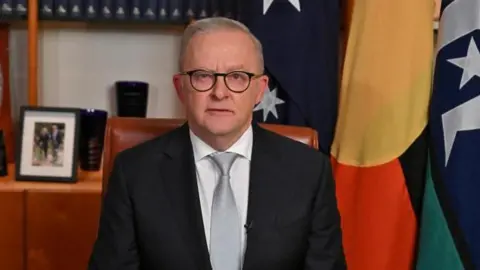
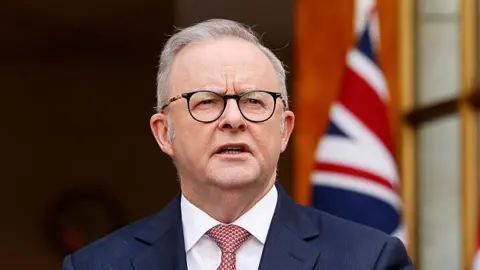
The deal, worth about A$10bn ($7bn; £5.2bn) was inked on Tuesday, with Australia's Prime Minister and the head of the European Commission describing it as a mutual 'win-win.'
The agreement allows for Italian-style sparkling wine made in Australia to still be sold as prosecco domestically, although the name will be phased out for exports over a decade.
Australian producers can also retain the use of names such as parmesan, while feta will face stricter regulations and extended phase-out periods.
Under the deal, almost all EU tariffs will be lifted on Australian agricultural products including wine, fruit and vegetables, olive oil, and most dairy products. The Australian government estimates this will save local wine producers and exporters approximately A$37m.
For Australian consumers, the agreement will lead to lower prices on European wine, spirits, biscuits, chocolates, and pasta.
Food naming rights remain a contentious issue on both sides, with Australia becoming the only nation outside Italy authorized to use the 'prosecco' name.
Prime Minister Anthony Albanese emphasized Australia's rich history shaped by migrants contributing to the country’s diverse culinary landscape.
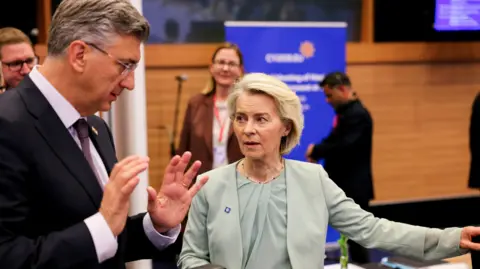
European Commission President Ursula von der Leyen stated that Australia and the EU share a 'unique relationship' built for longevity, enabling easier export routes for Australians and increased availability of EU goods in Australia.
However, concerns were raised by Andrew McDonald of Meat and Livestock Australia, who indicated that the meat export provisions do not adequately address Australian farmers’ expectations. The deal allows for approximately 30,000 tonnes of meat exports, a modest increase from 3,389 tonnes, which he deemed 'a missed opportunity.'
Australia and the EU also established a new security and defense partnership to enhance cooperation across various sectors such as defense industry, counter-terrorism, and maritime security, highlighting a focus on 'collective resilience' in a rapidly evolving global landscape.