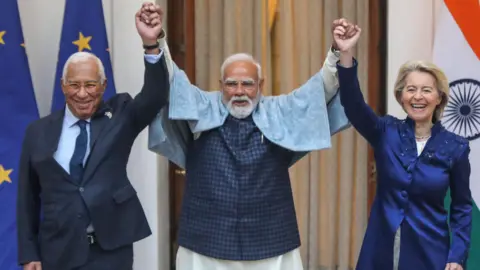
The European Union and India have announced a landmark trade deal after nearly two decades of negotiations, fostering closer ties in the face of growing tensions with the United States. The European Commission President Ursula von der Leyen declared, 'We did it, we delivered the mother of all deals,' while Indian Prime Minister Narendra Modi labeled the agreement as 'historic'.
This trade pact will facilitate the free movement of goods between the 27 EU member states and India, encompassing nearly a quarter of the world's GDP and a market with two billion consumers. The deal includes substantial tariff reductions for various goods and services, and also establishes a joint security partnership.
Following their bilateral summit in Delhi, von der Leyen and EU Council President António Costa revealed that the EU would eliminate tariffs on most exports, ranging from chemicals to electrical machinery, while significant cuts for Indian motor vehicles, currently taxed at 110%, will drop to 10% under a quota agreement. On the other hand, India will reduce tariffs on European products such as wine and beer.
This agreement not only aims to bolster investment flows but also enhances supply-chain complexities, allowing India's textile and agricultural exports, among others, to gain preferential treatment in EU markets. Modi emphasized that this would ease access for Indian farmers and small businesses, and bolster manufacturing and services sectors.
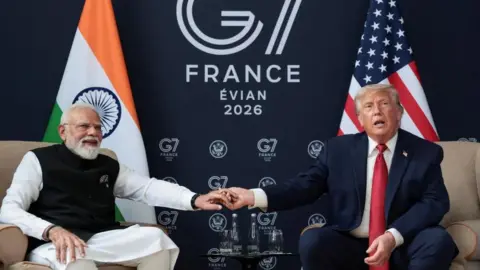
As the trade deal aligns with both regions’ economic objectives, it sends a strategic message of cooperation against mounting geopolitical challenges, especially from the US. This collaboration is seen as beneficial for addressing uncertainties in an increasingly coercive international trading environment and moving towards mutual prosperity and stability.