In brief
The emergence of AI influencers, exemplified by Gigi—an AI creation of Simone Mckenzie—raises questions about the future of social media content. While AI-generated content offers efficiency and creativity, it threatens traditional influencers by automating video creation and engaging audiences with quirky, absurd themes. Critics and experts discuss the implications of AI on authenticity, market competition, and the potential rise in misinformation in online media.
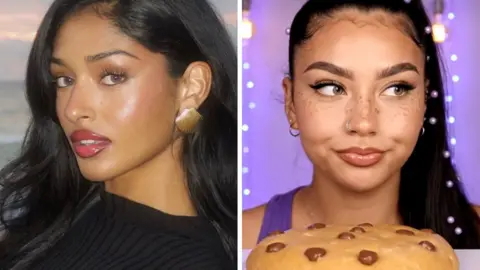
In some ways, Gigi is like any other young social media influencer.
With perfect hair and makeup, she logs on and talks to her fans. She shares clips: eating, doing skin care, putting on lipstick. She even has a cute baby who appears in some videos.
But after a few seconds, something may seem a little off.
Gigi can munch on pizza made out of molten lava, or apply snowflakes and cotton candy as lip gloss. Her hands sometimes pass through what she's holding.
That's because Gigi isn't real. She's the AI creation of University of Illinois student Simone Mckenzie - who needed to make some money over the summer.
Ms Mckenzie, 21, is part of a fast-growing cohort of digital creators who churn out a stream of videos by entering simple prompts into AI chatbots, like Google Veo 3. Experts say this genre, dubbed 'AI slop' by some critics and begrudging viewers, is taking over social media feeds.
And its creators are finding considerable success.
One video made me $1,600 [£1,185] in just four days, Ms Mckenzie said. I was like, okay, let me keep doing this. After two months, Gigi had millions of views, making Ms Mckenzie thousands through TikTok's creator fund, a programme that pays creators based on how many views they get.
But she's far from the only person using AI to reach easy virality. It's surging right now and it's probably going to continue, said Jessa Lingel, associate professor and digital culture expert at the University of Pennsylvania.
AI creators now have the potential to disrupt the lucrative influencer economy. While some argue that AI is ruining social media, others see its potential to democratize who gains fame online. Those who don't have the resources for a fancy background or intricate video editing can now achieve virality.
Social media influencing only recently became a legitimate career path, but in just a few years, the industry has grown to be worth over $250bn, according to investment firm Goldman Sachs. Online creators often use their lives—vacations, pets, makeup routines—to create content and attract a following. Now, AI creators can produce similar content faster, cheaper, and outside the constraints of reality.
While Ms Mckenzie generates her videos in mere minutes, traditional influencers like Kaaviya Sambasivam, 26, who boasts around 1.3 million followers, invest hours or even days in video production.
AI creators can skip nearly all of those steps, raising concerns for human influencers. There are months where I will be down in the dumps, and I'll post just the bare minimum. I can't compete with robots, Ms Sambasivam mused.
Initially considering a traditional influencer path, Ms Mckenzie opted for AI due to limited resources. My desk at home has a lot of books and stuff; it’s not the most visually appealing, she explained, appreciating how AI enables a custom-made background.
Critics warn that AI influencers could lead to a blurred line between reality and fabrication, particularly concerning misinformation. Nonetheless, many find AI videos captivating, enjoying their exaggerated and humorous nature.
As AI continues to shape social media, the future of traditional influencing and authenticity remains uncertain.