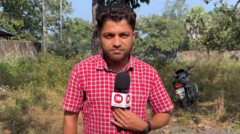
The body of an Indian journalist who extensively reported on corruption was discovered in a septic tank in Chhattisgarh's Bijapur district. Mukesh Chandrakar, 32, vanished on New Year's Day, prompting his family to file a police report. After tracing his mobile phone signals, authorities unearthed his remains on Friday within a septic tank situated on the premises of a road contractor. So far, three individuals—including two relatives of the journalist—have been detained in connection with his murder. Meanwhile, calls for a comprehensive investigation into the incident have intensified from various media watchdogs.
Initially overlooked, police rediscovered Chandrakar's body on January 3, following careful assessment of the compound. A police official stated, "The concrete slabs covering the septic tank, near the badminton court, concealed the body." Tragically, his remains displayed significant injuries indicative of a victim of violence.
Mukesh Chandrakar was well known for his diligent reporting and owned a popular YouTube channel, "Bastar Junction." In light of his death, the Press Council of India has sought an official report on the circumstances surrounding the tragedy from the state government. The state's chief minister expressed sorrow over the event, announcing the formation of a special investigation team to delve into the case. Reports indicate that one of those arrested is Chandrakar's cousin, while the primary suspect, the owner of the property, remains at large. In response, local journalists have organized protests calling for action against those responsible for the crime.
India has a troubled history when it comes to the safety of journalists, particularly those exposing corruption or environmental issues. A grim statistic from media watchdog Reporters Without Borders indicates that an average of three to four journalists are murdered annually in India as a result of their work, solidifying its ranking as one of the world’s most perilous environments for media professionals. Renowned journalist Subhash Kumar Mahto’s murder last year exemplifies the perilous landscape for reporters in the country, further igniting demands for increased protections for journalistic freedom.
Initially overlooked, police rediscovered Chandrakar's body on January 3, following careful assessment of the compound. A police official stated, "The concrete slabs covering the septic tank, near the badminton court, concealed the body." Tragically, his remains displayed significant injuries indicative of a victim of violence.
Mukesh Chandrakar was well known for his diligent reporting and owned a popular YouTube channel, "Bastar Junction." In light of his death, the Press Council of India has sought an official report on the circumstances surrounding the tragedy from the state government. The state's chief minister expressed sorrow over the event, announcing the formation of a special investigation team to delve into the case. Reports indicate that one of those arrested is Chandrakar's cousin, while the primary suspect, the owner of the property, remains at large. In response, local journalists have organized protests calling for action against those responsible for the crime.
India has a troubled history when it comes to the safety of journalists, particularly those exposing corruption or environmental issues. A grim statistic from media watchdog Reporters Without Borders indicates that an average of three to four journalists are murdered annually in India as a result of their work, solidifying its ranking as one of the world’s most perilous environments for media professionals. Renowned journalist Subhash Kumar Mahto’s murder last year exemplifies the perilous landscape for reporters in the country, further igniting demands for increased protections for journalistic freedom.