A new Bollywood spy film is generating praise - and unease - in India and Pakistan for its contentious portrayal of the longstanding hostilities between the South Asian neighbours.
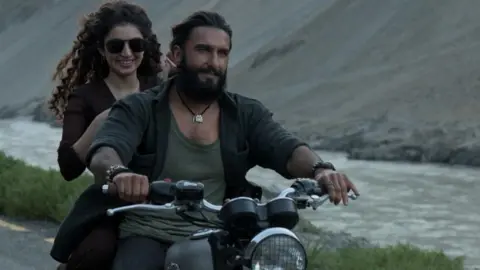
'Dhurandhar', which hit cinemas last week, plunges audiences into a high-octane world of espionage, gang wars and patriotic fervour.
Anchored by Bollywood star Ranveer Singh's swaggering performance as Hamza, an Indian spy on a perilous mission in Karachi, the film traces his battles against criminal networks, shadowy operatives and personal demons - all framed against the backdrop of India-Pakistan tensions.
While the action-packed sequences and riveting plot have earned praise from many viewers, the film, directed by Aditya Dhar, has also provoked sharp debate over its political messaging and treatment of historical events.
Dhar first gained national attention in 2019 with his debut 'Uri: The Surgical Strike', a dramatization of India's 2016 airstrikes on Pakistan. The film was a major box-office hit and earned him a national film award.
Though 'Dhurandhar' is only his second directorial effort, he has co-written and produced other films, including last year's 'Article 370' about the 2019 revocation of Kashmir's autonomy, which earned praise from Prime Minister Narendra Modi.
'Dhurandhar', arriving months after the worst India-Pakistan military clash in two decades, sees Dhar return to the political-thriller genre on a grander scale. Deadly fights and graphic violence are depicted in a raw manner, contributing to the uneasy atmosphere that permeates the film.
Online, praise and criticism have flown in equal measure - some are impressed by the film's cinematic ambition, while others find its hyper-nationalist tone and use of violence unsettling.
The Film Critics' Guild, responding to controversial reviews, condemned the harassment faced by critics reviewing 'Dhurandhar', showcasing the polarized views surrounding the film.
Despite intense debates, 'Dhurandhar' has drawn large audiences, capitalizing on a growing market for nationalistic blockbusters in India. Critics have pointed to its militaristic undertones and the portrayal of Pakistan as highly caricatured and overly simplistic.
Furthermore, the reception in Pakistan has been mixed, with critiques focusing on its negative portrayal of the country and concerns over Bollywood's assertion of narrative over local histories amidst limited cultural exchange. This film, like many in the genre, may continue to push boundaries and stir discussions on the responsibilities of filmmakers when addressing complex geopolitical issues.
'Dhurandhar', which hit cinemas last week, plunges audiences into a high-octane world of espionage, gang wars and patriotic fervour.
Anchored by Bollywood star Ranveer Singh's swaggering performance as Hamza, an Indian spy on a perilous mission in Karachi, the film traces his battles against criminal networks, shadowy operatives and personal demons - all framed against the backdrop of India-Pakistan tensions.
While the action-packed sequences and riveting plot have earned praise from many viewers, the film, directed by Aditya Dhar, has also provoked sharp debate over its political messaging and treatment of historical events.
Dhar first gained national attention in 2019 with his debut 'Uri: The Surgical Strike', a dramatization of India's 2016 airstrikes on Pakistan. The film was a major box-office hit and earned him a national film award.
Though 'Dhurandhar' is only his second directorial effort, he has co-written and produced other films, including last year's 'Article 370' about the 2019 revocation of Kashmir's autonomy, which earned praise from Prime Minister Narendra Modi.
'Dhurandhar', arriving months after the worst India-Pakistan military clash in two decades, sees Dhar return to the political-thriller genre on a grander scale. Deadly fights and graphic violence are depicted in a raw manner, contributing to the uneasy atmosphere that permeates the film.
Online, praise and criticism have flown in equal measure - some are impressed by the film's cinematic ambition, while others find its hyper-nationalist tone and use of violence unsettling.
The Film Critics' Guild, responding to controversial reviews, condemned the harassment faced by critics reviewing 'Dhurandhar', showcasing the polarized views surrounding the film.
Despite intense debates, 'Dhurandhar' has drawn large audiences, capitalizing on a growing market for nationalistic blockbusters in India. Critics have pointed to its militaristic undertones and the portrayal of Pakistan as highly caricatured and overly simplistic.
Furthermore, the reception in Pakistan has been mixed, with critiques focusing on its negative portrayal of the country and concerns over Bollywood's assertion of narrative over local histories amidst limited cultural exchange. This film, like many in the genre, may continue to push boundaries and stir discussions on the responsibilities of filmmakers when addressing complex geopolitical issues.