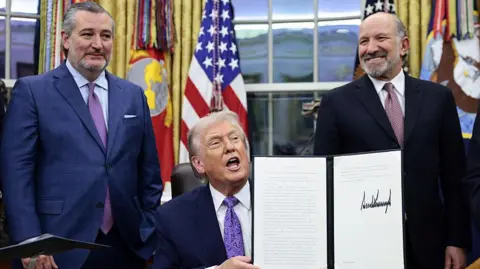
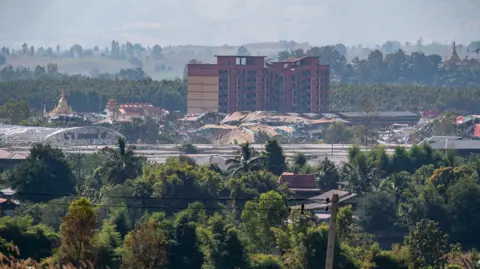
In a groundbreaking decision, President Trump declared on Tuesday his intent to lift sanctions imposed on Syria, offering crucial economic support to a nation ravaged by nearly 14 years of civil war and longstanding dictatorship under the Assad regime. This announcement came during a business forum in Riyadh, marking the start of Trump's first state visit in his second term, where he is slated to meet with Syria’s newly elected president, Ahmed al-Shara.
President al-Shara, who successfully led a rebel coalition that saw the fall of former President Bashar al-Assad last December, welcomed the U.S. policy shift as a potential harbinger of stability and progress for Syria. Cheers erupted in the forum as Trump proclaimed, “There is a new government that will hopefully succeed in stabilizing the country and keeping peace,” emphasizing the U.S. commitment to a stable Middle East.
The decision to lift sanctions reflects a significant change in U.S. foreign policy towards Syria, aimed at alleviating the economic hardships faced by its citizens. Trump revealed that this course was influenced by discussions with Turkish President Recep Tayyip Erdogan and Saudi Crown Prince Mohammed bin Salman, the latter of whom expressed intentions to escalate Riyadh’s investment in the U.S. to $1 trillion.
This strategic move aims to not only provide financial aid to Syria but also to foster collaboration within the region, ultimately enhancing security and prosperity in an area plagued by conflict and unrest for over a decade. As the situation evolves, the global community watches closely for the impacts of this newfound cooperation.