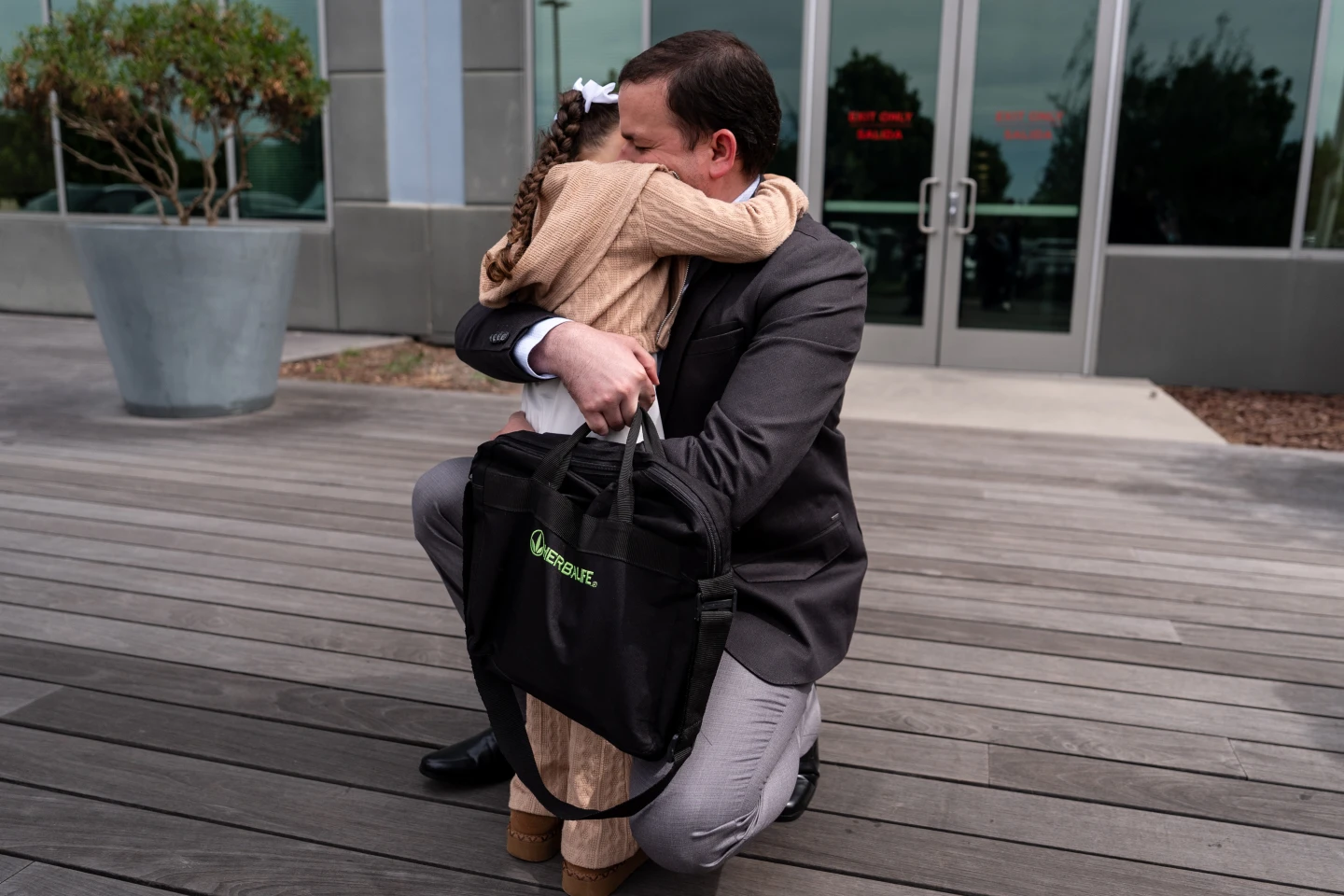
SANTA FE, N.M. (RTW News) — The wife of a U.S. Army sergeant is currently in detention at an immigration facility in El Paso, Texas, raising concerns about the Trump administration's increasing restrictions on immigrant family members of military personnel. Jose Serrano, who has served three tours in Afghanistan, witnessed his wife, Deisy Rivera Ortega, being arrested on April 14 during a scheduled appointment with immigration services to pursue her permanent residency.
Serrano recounted the shocking moment: A person opened the door, escorted us through the hallway, and at the end of the hallway, my wife got arrested. Arrested without any order, any warrant... They took away my wife. They don’t tell me anything.
Rivera Ortega, originally from El Salvador, is now contesting her detention in U.S. District Court, having requested an order to prevent her deportation to Mexico— a country where she has no connections and where visits by U.S. troops are heavily restricted.
Her attorney, Matthew James Kozik, stated that Rivera Ortega possesses a valid work permit and has previously been granted withholding of removal to El Salvador. However, the Department of Homeland Security claims that Rivera Ortega entered the U.S. illegally in 2016 and that a judge issued a final order of removal in December 2019. The DHS emphasized that work authorization does not provide legal status, which means she remains in ICE custody pending her removal.
Recently, Rivera Ortega was detained at the El Paso Service Processing Center, where Serrano was permitted to visit and communicate with her through a plastic barrier. She had applied under the parole in place policy, which previously expedited the residency process for spouses of service members.
Last April, however, the DHS repealed a 2022 policy that allowed military service of immediate family members to be a significant factor in immigration enforcement decisions. The new policy clearly states that military service alone does not exempt individuals from the consequences of violating immigration laws. This shift has raised alarm among military families, emphasizing the uncertainty surrounding their loved ones' immigration statuses.
Serrano recounted the shocking moment: A person opened the door, escorted us through the hallway, and at the end of the hallway, my wife got arrested. Arrested without any order, any warrant... They took away my wife. They don’t tell me anything.
Rivera Ortega, originally from El Salvador, is now contesting her detention in U.S. District Court, having requested an order to prevent her deportation to Mexico— a country where she has no connections and where visits by U.S. troops are heavily restricted.
Her attorney, Matthew James Kozik, stated that Rivera Ortega possesses a valid work permit and has previously been granted withholding of removal to El Salvador. However, the Department of Homeland Security claims that Rivera Ortega entered the U.S. illegally in 2016 and that a judge issued a final order of removal in December 2019. The DHS emphasized that work authorization does not provide legal status, which means she remains in ICE custody pending her removal.
Recently, Rivera Ortega was detained at the El Paso Service Processing Center, where Serrano was permitted to visit and communicate with her through a plastic barrier. She had applied under the parole in place policy, which previously expedited the residency process for spouses of service members.
Last April, however, the DHS repealed a 2022 policy that allowed military service of immediate family members to be a significant factor in immigration enforcement decisions. The new policy clearly states that military service alone does not exempt individuals from the consequences of violating immigration laws. This shift has raised alarm among military families, emphasizing the uncertainty surrounding their loved ones' immigration statuses.