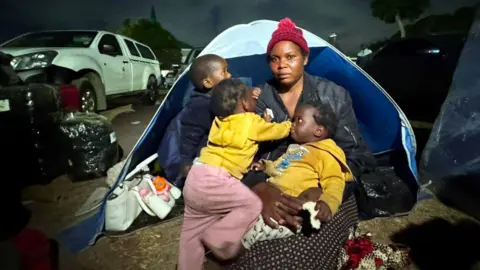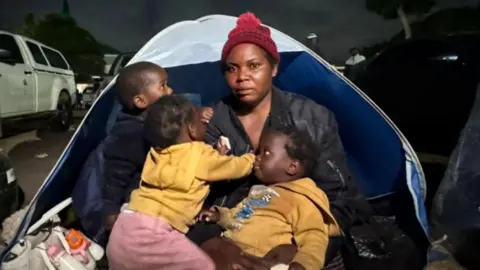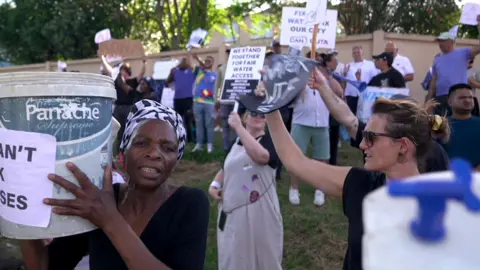
In the Johannesburg suburb of Greenside, a large group of protesters of all ages and backgrounds gathered, waving placards and chanting, We want water, we want water! Northern Johannesburg, known for its affluent neighborhoods, has been suffering from intermittent water shortages, with some residents going without running water for over a month. Colin Regesky, a Green Hill resident, expressed concerns about public health due to the lack of water, emphasizing that access to clean water is a constitutional right. Veteran protester Jenny Gillies called the situation a disgrace, lamenting that residents are reduced to begging for basic resources.
The water shortages have become increasingly dire, especially following years of electricity shortages in Johannesburg, which have severely disrupted life in the area. Experts attribute the worsening situation not only to poor infrastructure but also to the emergence of criminal syndicates known as water mafias that exploit the crisis by controlling the water delivery supply chain.
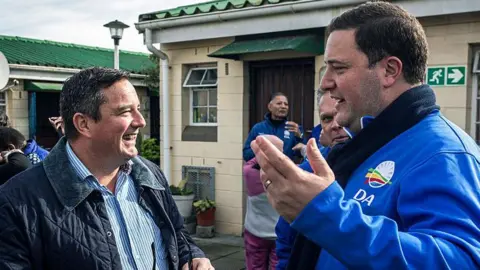
In Hammanskraal, mayor Cilliers Brink advocated for local government ownership of water tanks to counter the profitability of these criminal operations, although this proposal raises questions about its sustainability. Meanwhile, Dr. Ferrial Adam from the non-profit organization Watercan highlighted that these mafias often sabotage infrastructure to prolong their contracts or charge residents for water that should be free.
The local government has been criticized for not adequately addressing the water crisis, with President Cyril Ramaphosa recently pledging a coordinated national response and warning that municipal leaders would face criminal penalties for inefficiencies. As frustration mounts, residents' calls for immediate solutions echo across affected communities throughout South Africa.
The water shortages have become increasingly dire, especially following years of electricity shortages in Johannesburg, which have severely disrupted life in the area. Experts attribute the worsening situation not only to poor infrastructure but also to the emergence of criminal syndicates known as water mafias that exploit the crisis by controlling the water delivery supply chain.
In Hammanskraal, mayor Cilliers Brink advocated for local government ownership of water tanks to counter the profitability of these criminal operations, although this proposal raises questions about its sustainability. Meanwhile, Dr. Ferrial Adam from the non-profit organization Watercan highlighted that these mafias often sabotage infrastructure to prolong their contracts or charge residents for water that should be free.
The local government has been criticized for not adequately addressing the water crisis, with President Cyril Ramaphosa recently pledging a coordinated national response and warning that municipal leaders would face criminal penalties for inefficiencies. As frustration mounts, residents' calls for immediate solutions echo across affected communities throughout South Africa.