In brief
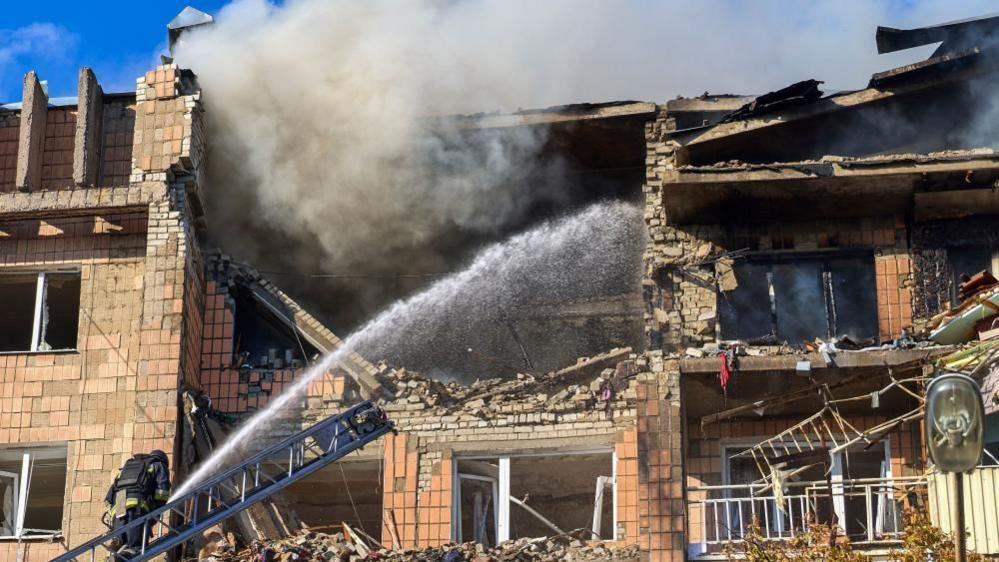
Russia struck six Ukrainian energy facilities just hours after Donald Trump announced an energy ceasefire, according to President Volodymyr Zelensky. The attacks caused blackouts in several cities and wounded 33 people across the country. While Zelensky praised the ceasefire as a potential step toward ending the war, he accused Russia of violating its terms by targeting gas stations and other infrastructure. European leaders have shown divided reactions, with some supporting the pause and others expressing skepticism.
Russia fired on six Ukrainian energy facilities within hours of U.S. President Donald Trump announcing an energy ceasefire. President Volodymyr Zelensky condemned the strikes, saying they proved Russia would not honour the pause.
"We did not attack, while Russia attacked our gas stations, energy infrastructure, and other facilities," Zelensky told Fox News.He added, "I think it was Putin's answer to President Trump."
The first attack on Sunday evening caused power outages in Izyum and damaged energy and railway infrastructure in western Ukraine. The Ukrainian state grid operator, Ukrenergo, reported new power cuts in Kharkiv, Donetsk and Zaporizhzhia, necessitating electricity rationing to prevent overloads.
On Monday, Russian Foreign Minister Sergei Lavrov said that Ukraine does not deserve the "respite" promised by the ceasefire, reinforcing Moscow’s stance that energy sites can be legitimate targets. Meanwhile, critics in Europe have mixed reactions; the EU’s Kaja Kallas welcomed a ceasefire that holds, while Estonia’s foreign minister said it was "not working."
The conflict over energy supplies has escalated dramatically, with the BBC Verify reporting that 273 strikes on Russian-controlled oil and gas facilities were recorded this year—more than double the 124 in 2025. Global conflict monitor Acled data shows Russian attacks on Ukraine’s energy network are 2.4 times higher than previous months.
Trump’s ceasefire plan also includes a U.S. initiative to import Russian diesel, temporarily lifting sanctions on energy imports. Zelensky described this move as a "gift" to President Putin, highlighting the complex diplomatic dynamics at play.