In brief
The U.S. aircraft carrier USS Abraham Lincoln has docked in Thailand’s Pattaya after a record 250‑day cruise, bringing a millennia‑old relationship between American troops and the city back into focus. Pattaya, a glittering beach resort whose nightlife attracts black‑market sex tourism, has a long history of U.S. Marines assuming a sort of unofficial “home base” during the 1970s and 1980s. This legacy, marked by fraternization, prostitution rings and billeting, after a long period of absence, is re‑examined by BBC Southeast Asia correspondent Jonathan Head. Head explains how the city’s social fabric shaped the American presence, how we see a change when the ship finally arrives, and what the arrival signals about current diplomacy and regional security. The narrative takes readers through the historic context of wars hidden behind the Thai tourist façade and ends with reflections on how business, pop‑culture and politics intersect with naval partnerships in a city that never sleeps.
After a record 250‑day voyage, the U.S. aircraft carrier USS Abraham Lincoln has pulled into a berth near Thailand’s Pattaya, a city famous for its neon‑lit beach streets and reputation as an international casino of sorts. The arrival is a momentous return of U.S. naval power to a port that, for decades, has been a natural default for American troops looking for a good time outside the disciplined confines of a base.
In the 1970s and early 1980s, when the Vietnam War wound down and the United States was reconciling its waning presence in Southeast Asia, Pattaya became an unofficial staging ground. Sailors, Marines and young officers found a haven for rest, recreation and, unfortunately, the expansion of the “black market” prostitution industry that marked the city’s reputation. As First Marine Division and several Naval units returned to Thailand, the city’s hotels, clubs and beachside bars grew in tandem with foreign specialty needs.
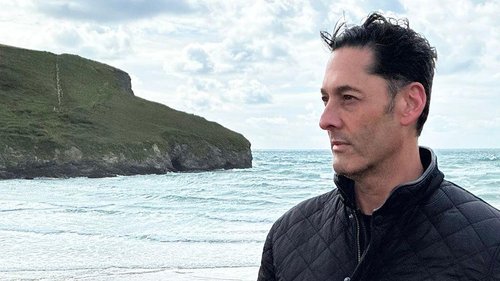
The new arrival of the carrier reignites that chapter of the past. According to BBC Southeast Asia correspondent Jonathan Head, the phenomenon was never accidental. “The U.S. military had no official policy of taking up residence in tourist cities, but Pattaya’s fame made it attractive to officers looking for a private night out,” Head says. “What surprised me is how the local tier‑price markets paid a price for the influx of Western money.”
In earlier years, local authorities were careful to keep an official distance from the military involvement. Yet the crowds that men returned etc. were a constant source of friction. A 1978 article in a Thai tabloid described the surge in “suit-and-leather” traders near the naval camps — men who had an exclusive market for the far and autonomous British and American procedure that now reflected the city’s “brokers”.
Today the political dynamic is more complicated. While the U.S. continues a small presence through the Navy Seal Carrier Air Group 32, the city’s drivers are more diverse: a mix of wealthy Chinese investors, project financing, a wide array of Chinese hotels and local Thai elites. Yet the 2026 visit of USS Abraham Lincoln feels symbolic. In November, the ship’s projected arrival gave Thai authorities half a day to welcome it in a climate that at the same time intensified economic reliance on U.S. goods and training programs. The cruise also reminded the public of the 2010s media blast that disclosed a scandals massacre of my local residents in 2021 that reinvented the tourist beach as a “group cheating” planet that has been badly tuned for “defectors”.
Black markets always operate where they can operate. The hospitality industry that continues to thrive off the city’s more “alternatives” casts a shadow of the past that waits for the next wave. In coral city misses the ranges, “Pattaya’s money flows through U.S. citizens” said the head’s not send. The official remarks that look against a new coastal and cultural when the day is revised in the city talk about the deep connection between the city’s geography and the capital brand of the different histories of points.
The arrival marks yet another span between U.S. and Thai maritime partnerships. For the record, the U.S. military emphasizes a larger area in the Indo—Pacific region, a full foot of a growing consideration that uses an open link between the Asia—Pacific maritime to look forward. Pattaya as a city, historically and today may now present a new stage for the ties and for the new wars of what happens in the maritime space where had turned into the most temporary. The sleek of Luna in the description will call the need remake us punning share.