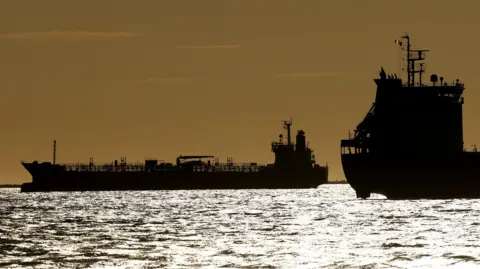
WASHINGTON (AP) — The U.S. military reported on Friday that it conducted an airstrike against an alleged drug-smuggling vessel in the Eastern Pacific Ocean, leaving three survivors. This operation aligns with the Trump administration's ongoing campaign to combat what it terms 'narcoterrorists'. U.S. Southern Command, responsible for overseeing military operations across much of Latin America, announced on X that it immediately notified the U.S. Coast Guard to initiate a search and rescue operation for the survivors. However, it remains unclear if the survivors have been rescued or if there were any casualties from the strike. Since the onset of the Trump administration’s operations against alleged traffickers in early September, at least 157 individuals have reportedly died in U.S. military strikes targeting small boats believed to be used for drug trafficking.
In many of its prior statements regarding the more than 40 known strikes in the Eastern Pacific and Caribbean, U.S. Southern Command has indicated that such military actions were focused on disrupting drug trafficking operations along established smuggling routes. Nevertheless, the military has not provided substantial evidence indicating that the vessel involved was indeed transporting narcotics. A recently released video showed the vessel engulfed in flames, creating a dramatic visual without validating the operation's justification.
President Donald Trump has publicly declared that the U.S. is engaged in 'armed conflict' with Latin American drug cartels and has justified military strikes as part of a necessary escalation to mitigate the flow of drugs into the U.S. and reduce the number of fatal overdoses affecting American lives. However, there remains a notable lack of concrete evidence presented by his administration to substantiate claims of eliminating 'narcoterrorists'. Critics have raised concerns regarding the legality and effectiveness of these maritime strikes, particularly as the fentanyl responsible for many overdose deaths is often trafficked into the United States across land from Mexico, where it is produced using precursor chemicals imported from countries like China and India.}
In many of its prior statements regarding the more than 40 known strikes in the Eastern Pacific and Caribbean, U.S. Southern Command has indicated that such military actions were focused on disrupting drug trafficking operations along established smuggling routes. Nevertheless, the military has not provided substantial evidence indicating that the vessel involved was indeed transporting narcotics. A recently released video showed the vessel engulfed in flames, creating a dramatic visual without validating the operation's justification.
President Donald Trump has publicly declared that the U.S. is engaged in 'armed conflict' with Latin American drug cartels and has justified military strikes as part of a necessary escalation to mitigate the flow of drugs into the U.S. and reduce the number of fatal overdoses affecting American lives. However, there remains a notable lack of concrete evidence presented by his administration to substantiate claims of eliminating 'narcoterrorists'. Critics have raised concerns regarding the legality and effectiveness of these maritime strikes, particularly as the fentanyl responsible for many overdose deaths is often trafficked into the United States across land from Mexico, where it is produced using precursor chemicals imported from countries like China and India.}