Trump Escalates Pressure on Venezuelan Leader Maduro Amid Drug Trafficking Concerns
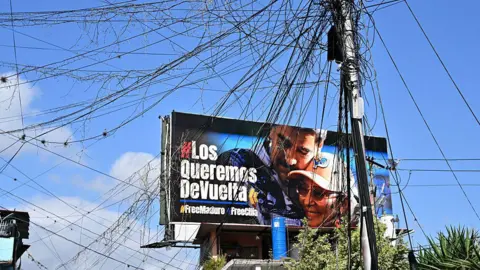
US President Donald Trump has been ramping up pressure on Venezuela's leader, President Nicolás Maduro. The Trump administration has doubled the reward for information leading to Maduro's capture, and its warships are within striking distance of Venezuela. Dozens of people have been killed in attacks on boats alleged to have been transporting drugs from the South American country.
Trump reportedly also gave Maduro an ultimatum to leave Venezuela, in a phone call the two men had on 21 November.
Who is Nicolás Maduro?
Nicolás Maduro rose to prominence under the leadership of left-wing President Hugo Chávez and his United Socialist Party of Venezuela (PSUV). Maduro, a former bus driver and union leader, succeeded Chávez and has been president since 2013. During the 26 years that Chávez and Maduro have been in power, their party has gained control of key institutions, including the National Assembly, much of the judiciary, and the electoral council.
In 2024, the electoral council declared Maduro the winner of the presidential election, even though voting tallies collected by the opposition suggested that their candidate, Edmundo González, had won by a landslide. The US is one of many countries that declared the election illegitimate and recognized González as president-elect.
But with Maduro firmly in control of the military, the police, and the legislature, he has remained in power, and González has fled into exile for fear of arrest.
Why is Trump focusing on Venezuela?
Trump has made stopping immigration a priority during his second term in office, blaming Maduro for the arrival of a large number of Venezuelan migrants in the US. Since 2013, close to eight million Venezuelans are estimated to have fled the economic crisis and political repression in Venezuela, which have both worsened under Maduro.
Most have fled to Latin American countries, but hundreds of thousands have gone to the US. Without providing evidence, Trump has accused Maduro of emptying his prisons and insane asylums and forcing its inmates to migrate to the US.
Trump has also focused on fighting the influx of drugs - especially fentanyl and cocaine - into the US. As part of his war on drugs, he has designated two Venezuelan criminal groups - Tren de Aragua and Cartel de los Soles - as Foreign Terrorist Organizations, alleging that the latter is led by Maduro himself. Maduro has vehemently denied these claims and accused the US of using its war on drugs as an excuse to try and depose him.
Why has the US sent warships to the Caribbean?
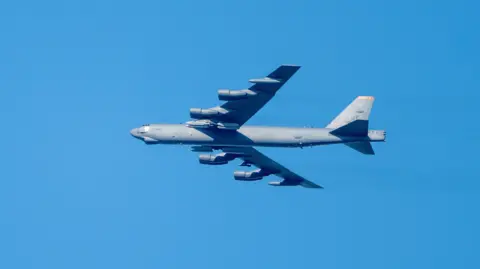
The US has deployed 15,000 troops and a range of aircraft carriers, guided-missile destroyers, and amphibious assault ships to the Caribbean. The stated aim of the deployment - the largest since the US invaded Panama in 1989 - is to stop the flow of fentanyl and cocaine to the US. Since early September, US forces have carried out more than 20 strikes in international waters on boats alleged to have been carrying drugs. The Trump administration argues that it is involved in a non-international armed conflict with the alleged drug traffickers.
However, legal experts say the strikes are unlawful as that designation did not transform them into lawful military targets. A former chief prosecutor at the International Criminal Court stated that the US military campaign fell into the category of a planned, systematic attack against civilians during peacetime.
Meanwhile, Trump confirmed he spoke to Maduro and reportedly gave him a one-week ultimatum to leave, which Maduro did not accept. One day after the deadline expired, Trump declared the airspace around Venezuela closed. He has already threatened to take action against Venezuelan drug traffickers, but the specifics remain unclear.