In brief
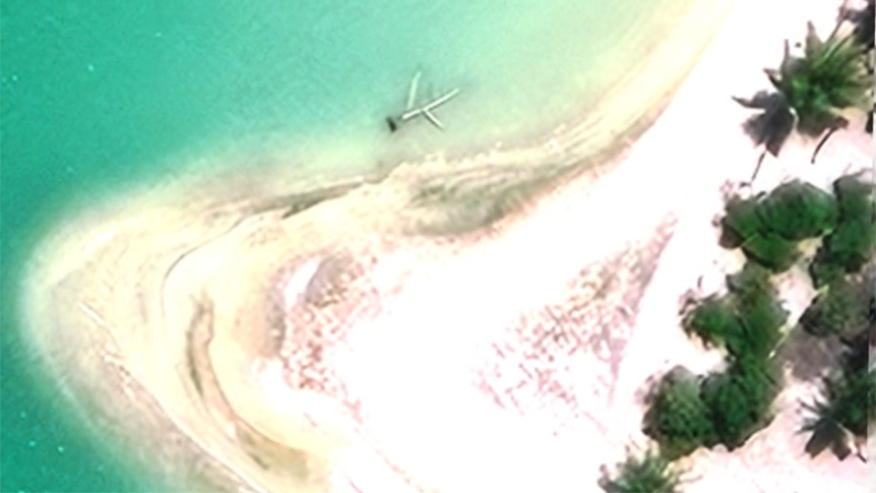
A team from Purdue University has visited the Taraia Peninsula on Nikumaroro, Kiribati, to investigate a shiny object first spotted on satellite imagery in 2020. Their findings point to a collection of large trees deposited along the sandspit rather than an aircraft wreck. The tantalising “Taraia Object” has been a key focus of Earhart enthusiasts for decades. While the cameras captured the object in 1938 photographs, researchers note that much of the debris had already been eroded by the time of their visit, leaving only a Y‑shaped fragment. The discovery sparks new debate over the decades‑old mystery of Amelia Earhart’s disappearance.
Researchers from Purdue University have returned to the Taraia Peninsula on the remote Pacific island of Nikumaroro to investigate the so‑called Taraia Object, a shiny feature first spotted on satellite images in 2020. They expected to uncover crater‑smooth wreckage that could belong to Amelia Earhart’s 1937 Lockheed Electra, but found evidence suggesting the glowing figure is actually a scattered mass of large trees that settled along the sandy spit.
The team noted that by the time they reached the site, most of the debris had already broken up and washed away, leaving only one Y‑shaped fragment. Purdue's lead researcher said the object had been visible in photographs as far back as 1938, yet the remaining material points to natural rather than man‑made origins.
Earhart’s disappearance during her round‑the‑world flight has long been shrouded in mystery. After successful legs from California across South America, Africa and Asia, she vanished over the Pacific while seeking the uninhabited Howland Island—a relative of Nikumaroro that is about 400 miles (644 km) distant.
The five‑day sea journey the research team undertook to Nikumaroro was hampered by rough seas and strong winds, delaying their survey. Once onshore, they spent four days drilling and sampling the site, hoping to find conclusive evidence. Instead, the story ended up feeding further discussion about what truly lies beneath the lagoon.
While the new findings dismiss the object as merely swept‑in lumber, the case of Amelia Earhart remains a tantalising research frontier for historians and oceanographers alike.