In brief
A mass grave containing approximately 32 bodies, mostly children, has been discovered in Kericho, Kenya, stirring outrage and demands for a thorough investigation. The bodies, including infants and foetuses, were found in gunny bags, prompting questions about their origins and burial procedures. Authorities have commenced examinations as public concerns about possible foul play rise.
Authorities in Kenya have unearthed a mass grave in the western town of Kericho, revealing about 32 bodies, most of which belong to children, including infants and foetuses. The shocking discovery has raised alarms among local communities and sparked an ongoing investigation into the circumstances of the burial.
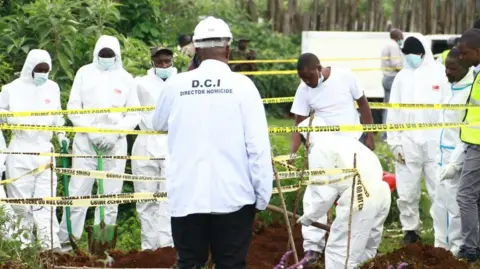
The exhumation was conducted following a court order that allowed the retrieval of 14 bodies initially thought to be buried at the site. However, the findings exceeded expectations, with a government pathologist describing the situation as 'quite unusual,' with bodies found stacked in gunny bags, amidst challenging weather conditions.
While an autopsy is scheduled to commence, preliminary examinations indicate that 25 of the remains are children, along with seven adult bodies. This grim finding has raised concerns that some of the bodies may have originated from hospitals, pending further analysis post-autopsies.
The exhumation has drawn a crowd of observers, with police sealing off the area to maintain order as forensic teams work carefully. As indicated by the Directorate of Criminal Investigations (DCI), the investigation was prompted by a whistleblower, leading detectives to probe the burial practices at the site, which is owned by the National Council of Churches of Kenya (NCCK). The NCCK has stated there was no approval for the burial, which has left officials bewildered.
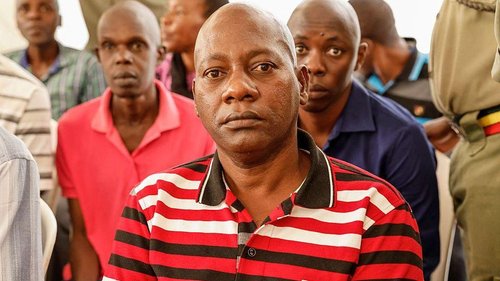
Two suspects, including a public health officer and a cemetery caretaker, have been arrested as part of the investigation amidst a backdrop of past incidents in Kenya involving mass graves linked to cult practices. The situation is particularly sensitive given recent events where hundreds of bodies were uncovered near Malindi in what is believed to be a horrific case of cult-related deaths, stirring public outrage and demands for accountability.
Human rights groups have described the discoveries as a deteriorating pattern in the region, emphasizing the need for swift identification of the victims and transparent investigations into potential criminal activities associated with the burials.