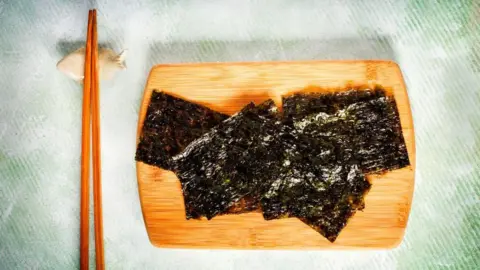
Dried seaweed, known as gim in South Korea, is a staple food on dining tables across the country. However, the growing global popularity of this product has led to a rise in its prices, alarming consumers who have relied on it as an affordable addition to their meals.
Lee Hyang-ran, a market vendor in central Seoul, has been selling gim for 47 years. She reflects on how the perception of the product has shifted, stating, In the past, people from Western countries thought Koreans were eating something weird that looks like a piece of black paper. I never thought I'd be selling gim to them. But now, they all come here and buy it.
As the world's largest producer and exporter of gim, South Korea supplies markets in Asia, North America, and Europe. Exports hit a record US$1.13 billion in 2025, revealing a significant increase in demand. The price per sheet of gim, previously around 100 won ($0.06) in 2024, has now exceeded 150 won, and premium products are going for as much as 350 won.
The worldwide appetite for gim aligns with the rising interest in Korean culture, particularly influenced by K-pop and K-dramas. US supermarket chain Trader Joe's witnessed the viral popularity of its Gimbap (a rice roll wrapped in seaweed), emptying shelves soon after its launch.
Consumers like Kim Jaela, who typically buys in bulk, voice concerns over the rising cost. Oh my, it really did get more expensive by a few dollars! Luckily, I can survive a few more weeks with two packs of gim, but if I see the same or higher price later, I probably won't restock, she shares.
Experts cite multiple factors for the price increase, including inflation, rising labor costs, and a decline in overseas production, but increased global demand remains a significant driver. The South Korean government and food companies are taking measures to monitor and stabilize prices, with suggestions such as establishing land-based seaweed research facilities.
In Seoul's bustling markets, demand continues to thrive. Lee notes, Gim has been selling like hot cakes... the ones for making gimbap are especially popular. I'm glad Korean gim is getting popular.\
Lee Hyang-ran, a market vendor in central Seoul, has been selling gim for 47 years. She reflects on how the perception of the product has shifted, stating, In the past, people from Western countries thought Koreans were eating something weird that looks like a piece of black paper. I never thought I'd be selling gim to them. But now, they all come here and buy it.
As the world's largest producer and exporter of gim, South Korea supplies markets in Asia, North America, and Europe. Exports hit a record US$1.13 billion in 2025, revealing a significant increase in demand. The price per sheet of gim, previously around 100 won ($0.06) in 2024, has now exceeded 150 won, and premium products are going for as much as 350 won.
The worldwide appetite for gim aligns with the rising interest in Korean culture, particularly influenced by K-pop and K-dramas. US supermarket chain Trader Joe's witnessed the viral popularity of its Gimbap (a rice roll wrapped in seaweed), emptying shelves soon after its launch.
Consumers like Kim Jaela, who typically buys in bulk, voice concerns over the rising cost. Oh my, it really did get more expensive by a few dollars! Luckily, I can survive a few more weeks with two packs of gim, but if I see the same or higher price later, I probably won't restock, she shares.
Experts cite multiple factors for the price increase, including inflation, rising labor costs, and a decline in overseas production, but increased global demand remains a significant driver. The South Korean government and food companies are taking measures to monitor and stabilize prices, with suggestions such as establishing land-based seaweed research facilities.
In Seoul's bustling markets, demand continues to thrive. Lee notes, Gim has been selling like hot cakes... the ones for making gimbap are especially popular. I'm glad Korean gim is getting popular.\