In brief
In the ruins of Gaza, 24‑year‑old software engineer Walaa Volidis and her peers keep working online, connected to mentors across the world. New co‑working spaces powered by generators and solar panels provide the bandwidth and electricity needed for remote jobs. While many face cash shortages, bank access and payment hurdles, the Gaza tech community leverages digital platforms to earn income and plan for post‑conflict life.
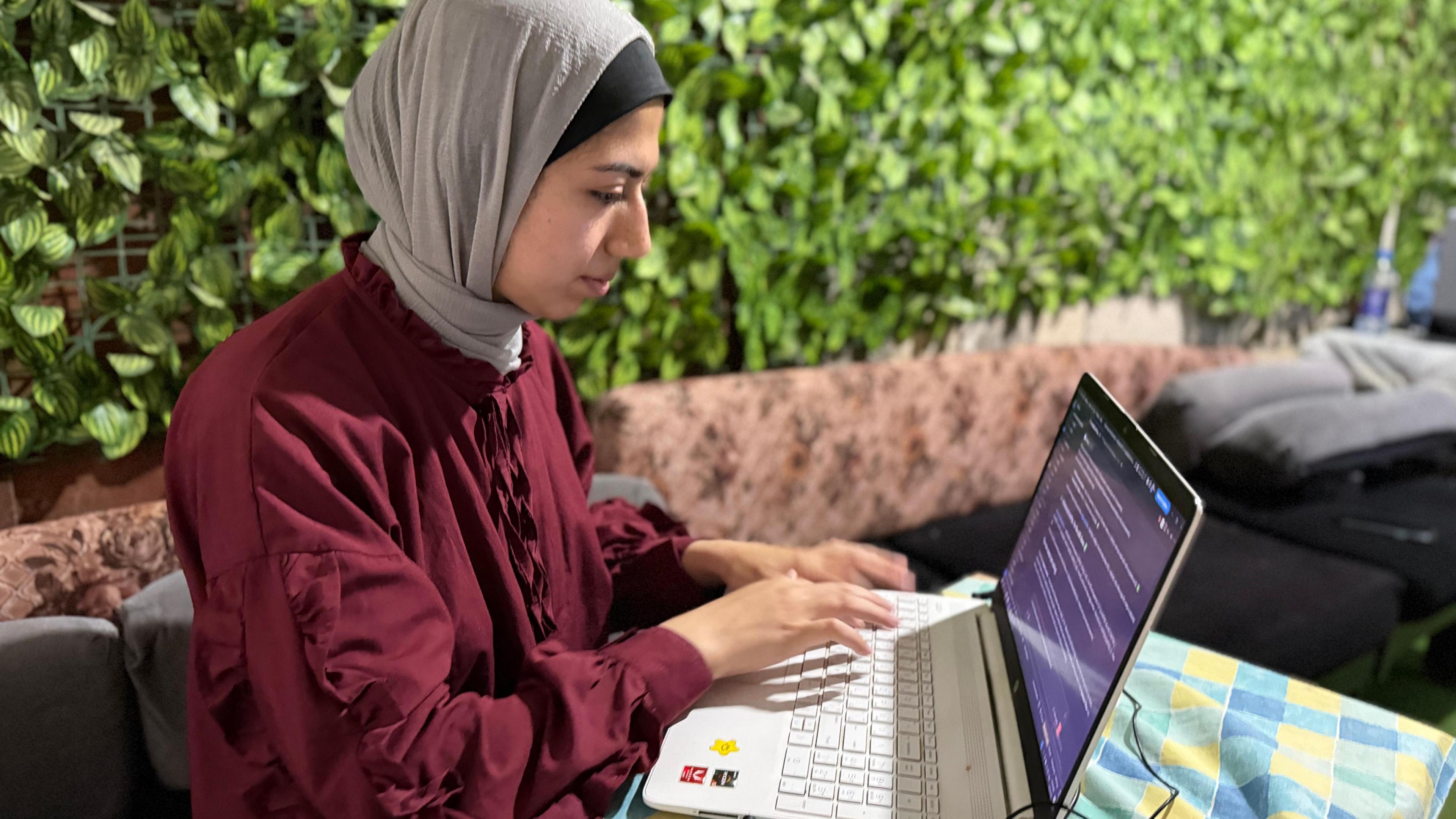
In the midst of war‑torn Gaza, a handful of tech‑savvy young adults have turned their laptops into lifelines, sustaining every day work while a war rages outside their tent‑shaped homes. For the 24‑year‑old Walaa Volidis, it is a daily battle of staying online and staying alive. She balances a video call with a mentor in California’s Silicon Valley while keeping her parents and four younger siblings afloat in the town of Deir al‑Balah.
Things were lost in the opening days of the conflict – jobs, university, homes, and even some family members. Walaa’s mental health was shattered, yet she found the resolve to search for work, unable to accept a life of dependence on aid. “I was just in a trough, drowning in uncertainty,” she says, but she vows that it will not be the end.
Her resilience is echoed by fellow Gaza tech workers. Freelance programmers like Tarik Zaeem, now 44, who once led a local firm, now develops apps for international clients. Mahran Bayed, a former CTO, confronts the physical and logistical challenges of a damaged laptop screen and a power‑worried environment while still shipping mobile apps for Saudi clients.
The population is mostly humanitarian aid‑dependent, with unemployment rates exceeding 80%. In this climate, online freelancing presents “a digital lifeline”: any person with a laptop and an internet connection can earn an income. Programs run by NGOs like Mercy Corps and TAP mentor tech talent, help them find remote gigs, and secure corporate sponsorships in the Gulf and beyond.
Co‑working spaces have sprouted across Gaza, equipped with generators and solar panels to counter power shortages and 75 % communication infrastructure damage. They provide fast broadband, shared workstations, and a community where people learn from one another and collaborate on projects that reach clients in the United States, Australia, and the United Kingdom.
Yet profits are thin. Payment channels are constrained by banks closed or by restrictions on digital transfers for Palestinians. Many workers funnel funds through relatives abroad; others rely on high‑fee brokers to convert overseas payments into cash. The outcome is often a squeeze that leaves them living on the bare minimum.
Despite hardships, their daily focus remains clear. Walaa, after securing a full‑time role with a Dubai‑based firm, aims to lift her family’s standard of living and facilitate medical evacuation for her younger sister, who suffers a chronic swelling condition. “My first hope is to get my family a good life, to help my sister find treatment and to secure scholarships for my own future,” she states.
Through the resilient spirit of these workers, the world sees a glimpse of Gaza’s potential rebound: a population whose skills and persistence could fuel reconstruction and economic renewal once peace resumes.