In brief
Gina Russo and Phil Barr, survivors of past nightclub fires, recount their harrowing experiences during the catastrophic events. Reflecting on the similarities between the Station nightclub fire in Rhode Island and the recent Swiss fire, experts emphasize the critical need for improved fire safety protocols. Both tragedies, sparked by indoor pyrotechnics, highlight the devastating speed of fire spread, leaving audience members with mere seconds to escape.
Warning: This article contains themes you may find upsetting
Gina Russo was watching a gig with her husband-to-be, Fred Crisostomi, one night in 2003 when she realised something wasn't right. Great White, an 80s hair-rock band, had opened their set with a thrash of guitar chords, as four large pyrotechnic flares shot out from the stage. The flares instantly set fire to the surrounding acoustic foam panels, installed to deaden the sound.
It was immediate, Gina recalls. It got bad very fast. The backflash just happened that quick. Then came a black rain of smoke, alongside the sound of glass lights shattering from the heat. Gina and Fred rushed for the nearest exit but were met by a bouncer blocking their path. As panic ensued, Fred pushed Gina through the crowd to escape, and she passed out just after making it outside.
Waking from an induced coma 11 weeks later, Gina learned that Fred had perished in the fire while saving her life.
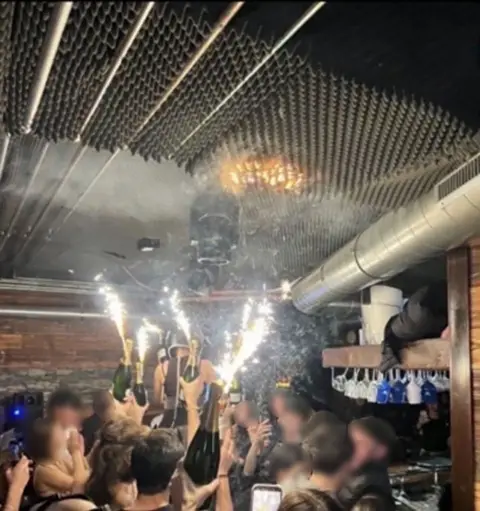
22 years later, the tragedy was echoed by a similar disaster in Switzerland at Le Constellation bar, where indoor pyrotechnics ignited a fire that took 40 lives, primarily young party-goers. Fire investigation experts note alarming similarities in both events, highlighting the rapid spread of flames due to untreated foam panels.
Fire behavior expert Richard Hagger asserts that both fires were fueled by flammable materials and that indoor pyrotechnics create potentially deadly flashover situations, where room temperatures can become lethal in a matter of minutes. Understanding the speed at which fire spreads is essential for survival.
In both tragic events, many victims had little time to escape. The chaos leaves a lingering question—are audiences aware of the dangers of such situations?
Research indicates a psychological tendency to underestimate fire risks. Past studies show that many individuals may interpret situations like fires as less serious when observing others' calmness. This phenomenon possibly contributed to the delays in actions taken by concert-goers during both fires.
Experts emphasize a crucial lesson: having an escape plan and being mentally prepared can be the difference between life and death in emergency situations. In light of these tragic events, it is imperative to advocate for higher fire safety standards to prevent future disasters.
Both Gina and Phil carry the scars from their experiences, which transformed their lives irrevocably. They advocate for awareness of fire risks, not just for personal safety but to protect others as well.