In brief
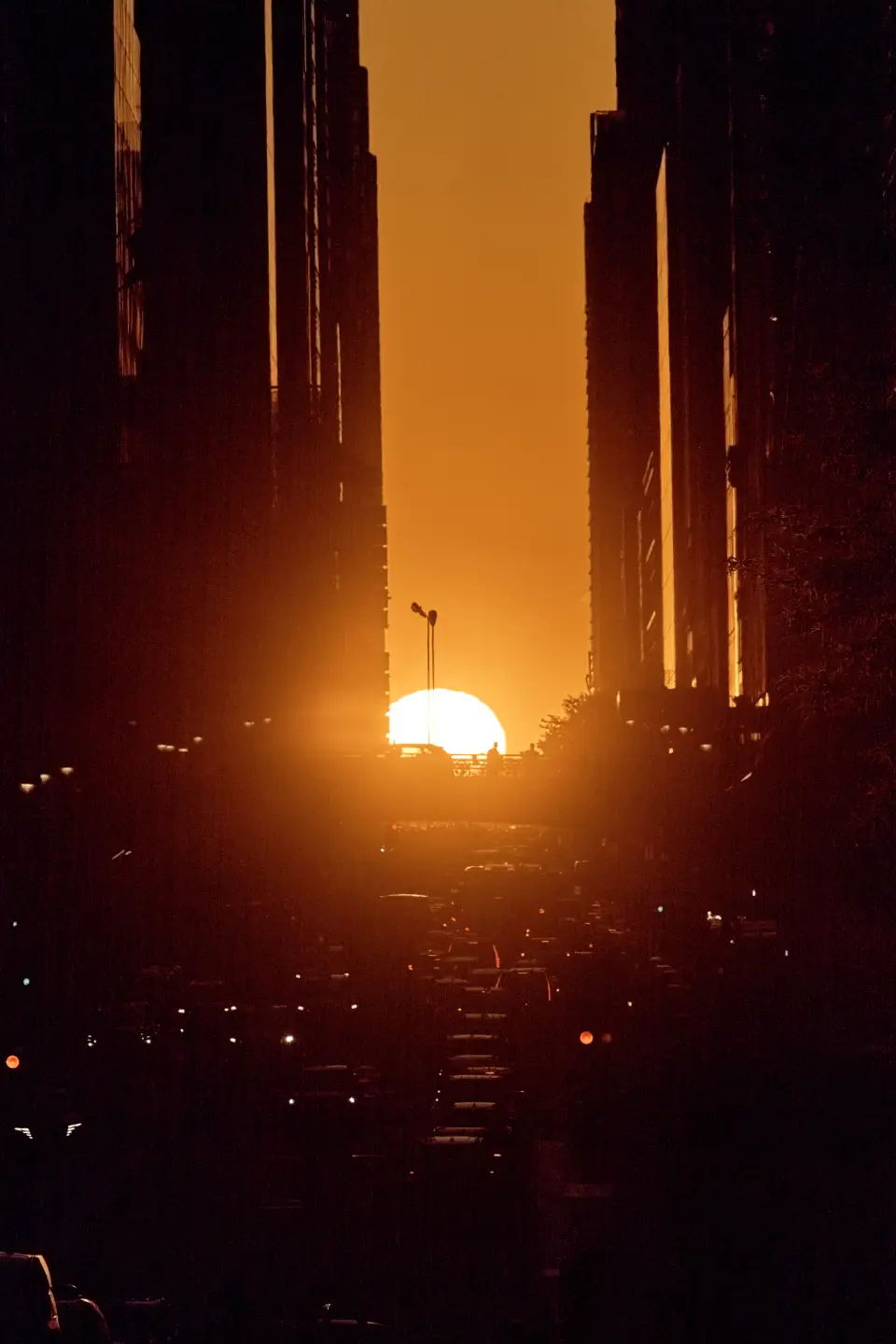
For two consecutive summers in 2026, New York City will host Manhattanhenge, when the setting sun aligns perfectly with the city’s east‑west grid, creating a dramatic, half‑sun, half‑sky effect. The event first appeared in 1980 and has since attracted thousands of photographers. The name was coined by astrophysicist Neil deGrasse Tyson after comparing Manhattan’s skyline to Stonehenge’s solstice alignment. This year’s event begins on Thursday evening, June 13, with a brighter full‑sun version on Friday, June 14, and repeats on July 11‑12. The best viewing spots are along 14th–57th Streets and from Long Island City. Manhattanhenge is a spontaneous, DIY festival that doesn’t require formal organization. Other cities with similar grid‑sun phenomena include Chicago, Baltimore, and Toronto.
NEW YORK (AP) — On Thursday and Friday evenings, New Yorkers and visitors will stand on city streets and watch the setting sun break into a golden hazy halo under the skyline of Manhattan’s skyscrapers. That celestial alignment – a phenomenon that has been called Manhattanhenge – is happening again in 2026.The effect occurs when the sunrise or sunset sits exactly along the city’s east‑west streets. When that alignment takes place, the sun appears to “bounce” between towers, giving the illusion that it is half‑above and half‑below the horizon. The first Manhattanhenge dates back to 1980 and has become a must‑see event for camera operators, theatergoers and art lovers.The name was coined by astrophysicist Neil deGrasse Tyson in a 1997 article for Natural History magazine. Tyson, a native New Yorker, was inspired by a childhood visit to Stonehenge ― an ancient megalithic site that has long been believed to mark solstices. When he saw the setting sun carved out by New York’s high‑rise canyon, he compared the sight to Stonehenge’s solstice alignment and coined the term Manhattanhenge.The phenomenon does not happen on the summer solstice itself (June 21) but roughly three weeks before and after. For 2026 the events happen on Thursday June 13 and Friday June 14, with a full‑sun version on the latter – the entire sun appears suspended between spires. The sunset continues the pattern on July 11 and 12.The most iconic on‑street viewing spots are the major east‑west thoroughfares: 14th, 23rd, 34th, 42nd and 57th Streets. The view is strongest farther east, where the sun’s rays strike the building facades before disappearing traffic on the Hudson River. The Long Island City area over the East River also offers a clear vista.Unlike many traditional festivals, Manhattanhenge is largely a DIY affair. Gatherings arrive on the street half an hour to an hour before sunset, set up cameras or phones and snap photos as the sky shifts. There is no paid admission or official event; once the weather turns cloudy or rainy the nocturnal vista disappears.Other cities with grid‑aligned sun phenomena include Chicagohenge, Baltimorehenge and Torontohenge, occurring around the equinoxes and mid‑season. However, Manhattanhenge stands out for its sheer skyline height and an unobstructed path to the Hudson River – providing a dramatically compelling sunset that has captured the imaginations of millions.So mark your calendars: The next chance to witness the sun swing perfectly into Manhattan’s streets is on Thursday, June 13 and the following day. Bring a camera, your friends and an appreciation for geometry – and let the sky paint its masterpiece over the City that Never Sleeps.