In brief
After detecting a crack in the high-speed rail track between Madrid and Barcelona, Spanish authorities have imposed a temporary speed limit of 80 km/h. This decision comes shortly after a devastating train collision that resulted in 45 fatalities and highlights ongoing concerns regarding the safety and maintenance of Spain's rail infrastructure.
Spanish rail authorities have temporarily reduced the speed limit on part of the high-speed line between Madrid and Barcelona after a fault was detected on the track.
Transport Minister Óscar Puente stated that a crack was found on Sunday night in the line located 110km (68 miles) west of Barcelona, between Alcover and l'Espluga de Francolí in the Catalonia region.
This announcement follows a tragic high-speed collision that killed 45 people in southern Spain and comes amid severe disruptions to local rail services in the north-east of the country.
Despite the fault, the transport ministry insists that the situation does not pose a danger to trains, meaning they will continue to operate on the affected line.
This is the latest and most drastic of several speed reductions implemented on high-speed lines recently, particularly after the accident in Adamuz, Andalusia, earlier this month.
The newly applied speed limit will now be 80km/h (50mph) at the affected section, a significant decrease from the 300km/h typically allowed on this busy route. Recent reports of vibrations on the Madrid-Barcelona line led to a temporary speed reduction to 230 km/h, which was later restored after technical checks.
In addition, parts of the Madrid-Valencia line have also seen temporary speed limits lowered to 160km/h and 200km/h.
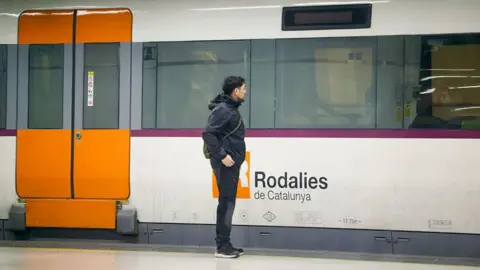
In regional rail news, severe disruptions continue for the Rodalies local rail service in Catalonia, previously halted after a trainee driver was killed when a train hit a collapsed wall. After subsequent incidents plagued the service, which has drawn criticism for lacking investment, the Spanish government hinted that cyberattack possibilities were being considered.
The investigation into the Adamuz crash remains ongoing, with track safety being a central focus after crucial pieces from the train's track were identified as problematic. Opposition politicians are pressing for accountability, questioning the transparency of Transport Minister Óscar Puente in the wake of these incidents.