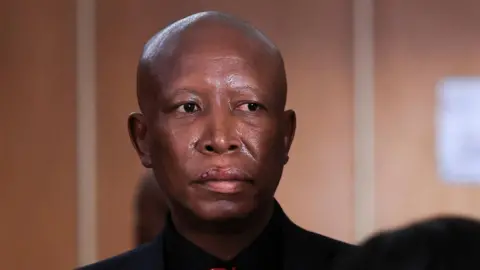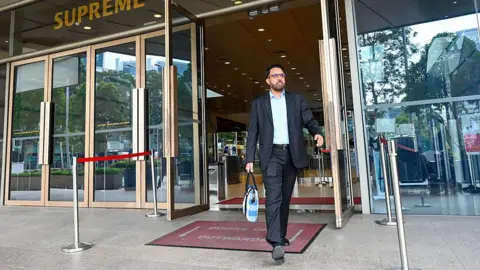
Singapore's opposition leader Pritam Singh has lost his appeal against a guilty verdict of lying to a parliamentary committee.
In February, Singh was fined S$14,000 ($10,800; £8,100) for two charges related to his handling of Raeesah Khan, a former lawmaker from his party who confessed to lying to parliament.
In a short hearing to a packed court public gallery on Friday, the judge said Singh's conviction was supported by the evidence provided.
Singh, who leads the main opposition Workers' Party, said that he was disappointed with the decision but accepted it fully and without reservation.
He paid his fines at the courthouse after the hearing, stating, Might as well get it done, to reporters.
Singh retains his seat in parliament despite the conviction, and said on Friday that he would keep serving Singaporeans along with his colleagues. The Workers' Party is the only opposition party in Singapore's current parliament, where it holds 12 out of 99 seats.
What to know about the case
The saga began in 2021, when Khan claimed in parliament that she had witnessed the police misbehave towards a sexual assault victim. She later admitted that her anecdote was not true, stating during a parliamentary committee investigation that the party's leaders, including Singh, had told her to continue with the narrative despite knowing about the lie.
Khan has since resigned from the party and parliament, receiving a fine of S$35,000 for lying and abusing her parliamentary privilege.
In February, the court ruled that Singh's actions were strongly indicative that he had not wanted Khan to clarify her lie, although Singh maintained his innocence throughout the trial, arguing that he wanted to allow her time to deal with what was a sensitive issue.
During Singh's appeal hearing in November, his lawyer argued that the court had ignored crucial pieces of evidence in its ruling, attempting to cast doubt on the credibility of Khan and her aides, who served as witnesses.
Singh's case stands out as one of the only criminal convictions against a sitting opposition lawmaker. Critics have accused Singapore's government of using the judiciary to target political opponents, a charge that authorities have consistently denied.