In brief
Since taking office a year ago, Robert F. Kennedy Jr., as Secretary of Health and Human Services, has made significant changes to vaccine policies and health recommendations that have sparked debates and confusion among healthcare professionals and the public. His approach is seen as a departure from traditional health guidelines, leading to decreased trust in federal health agencies.
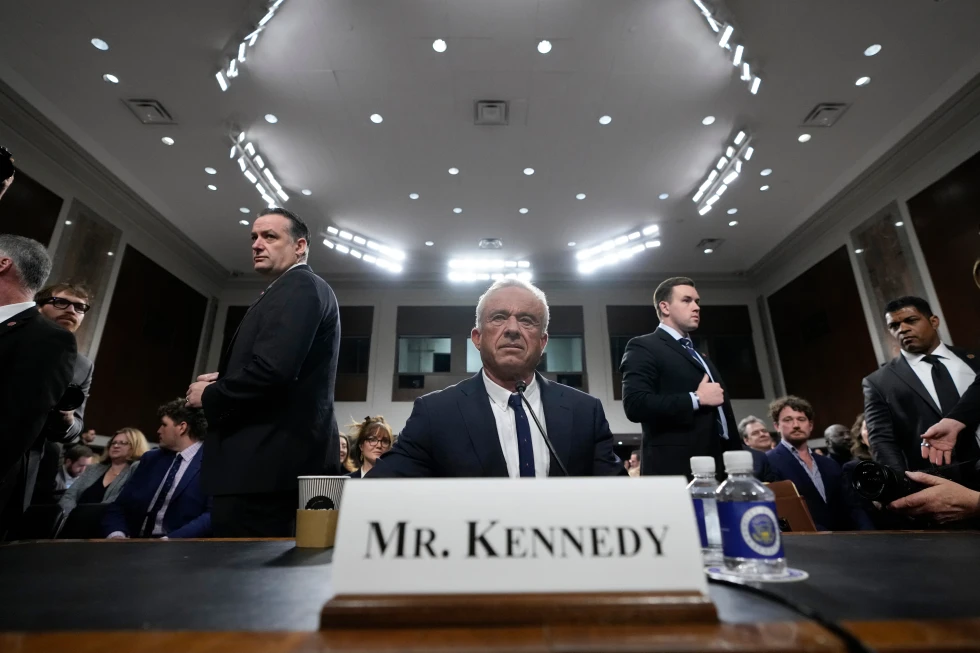
NEW YORK — Since Robert F. Kennedy Jr. was sworn in to lead the U.S. Department of Health and Human Services (HHS) one year ago, he has championed changes in federal health policy that he claims will restore public trust. However, his actions, particularly relating to immunization guidance and the dismissal of scientific consensus, have led to conflicts with medical groups who argue he is not adhering to scientific guidelines.
Public confidence in HHS is reportedly declining amid these changes, which have stirred confusion, especially following the COVID-19 pandemic. Surveys indicate that trust in the very agencies Kennedy is supposed to bolster is dwindling rather than improving.
Kennedy asserts that he aims to enhance transparency and empower individual health decisions, yet many doctors contend that the misinformation disseminated under his leadership could lead to serious public health consequences, including increased illness and mortality due to lower vaccination rates.
Once revered for their reliability, federal health agencies have witnessed a significant reduction in public approval ratings. The Centers for Disease Control and Prevention (CDC), for instance, dropped from over 60% of Americans rating them favorably two decades ago to only 40% at the peak of the pandemic. The ongoing changes under Kennedy's administration are further complicating the public's perception of these agencies.
Critics argue that Kennedy is simultaneously attempting to rectify a trust problem that he played a part in creating. His previous advocacy against vaccines has made it difficult to view his current policies—many of which have been unilaterally implemented—as trustworthy or scientifically sound.
Significant actions taken by Kennedy include the recommendation that COVID-19 vaccines be abandoned for healthy children and pregnant women, contradicting established health guidelines. He has also directed the CDC to retract statements on vaccines and autism without presenting new evidence, thus raising serious alarm among health experts.
As confusion mounts, some health leaders worry about rising instances of diseases once thought eliminated in the U.S. Many public health organizations are urging investigations into Kennedy’s changes, which lack proper input and scientific backing.
Ultimately, Kennedy’s push for transparency, while aiming to counteract the declining public trust, is raising more questions than answers, complicating the landscape of public health amid an already skeptical populace.
AP Writer Amelia Thomson DeVeaux contributed to this report.