
In brief
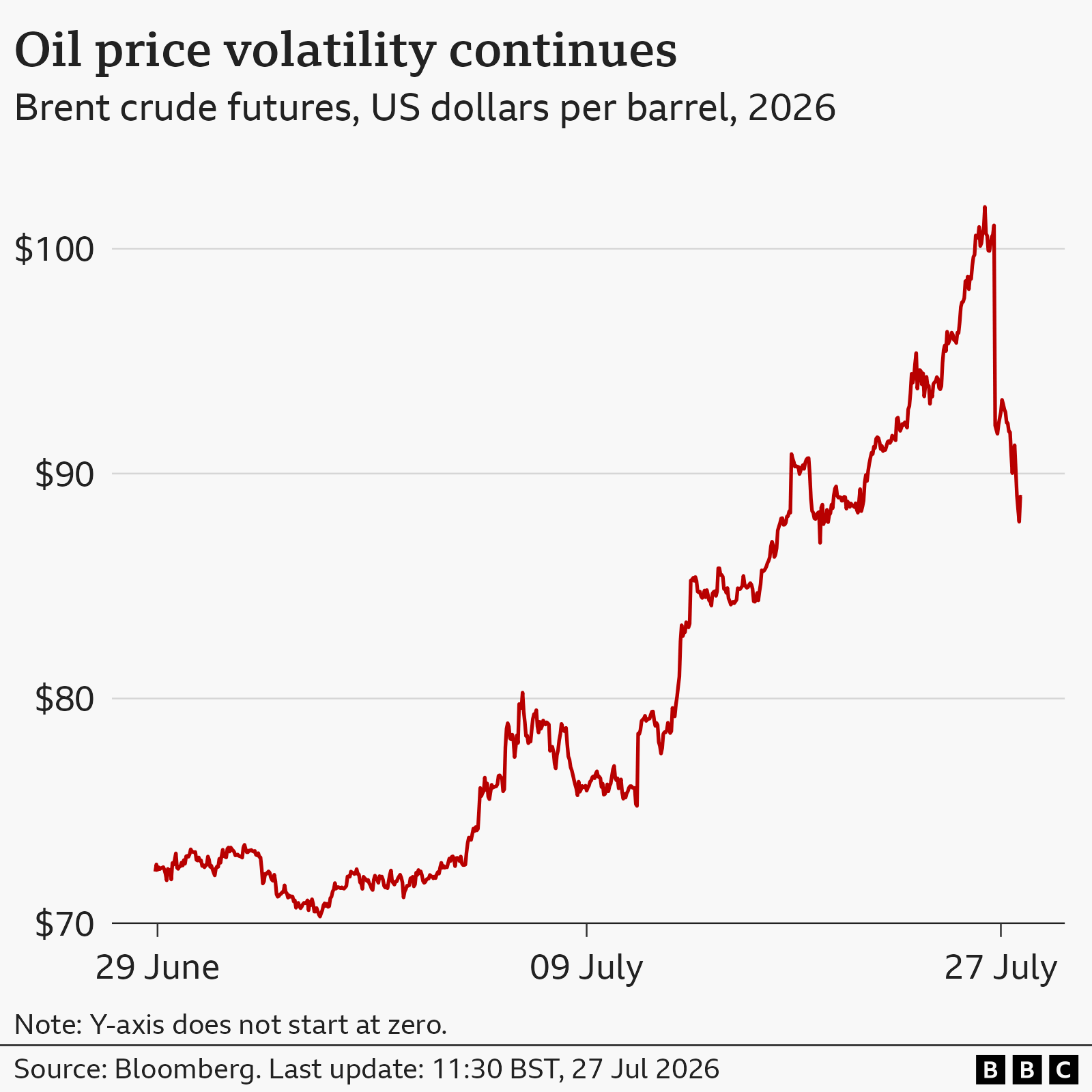
Brent crude has fallen steeply to $87.59 per barrel after U.S. and Iranian forces halted attacks for a second consecutive night, a move that could ease tensions and inhibit further price gains. The pause follows a June cease‑fire that saw prices drop from above $100 before disrupting again earlier this month. Market analysts remain cautious, citing lingering uncertainty over whether diplomatic outreach will sustain a lasting break in hostilities. Meanwhile concerns over potential restrictions on the Strait of Hormuz have prompted warnings that European gas storage could fall below safe levels, influencing winter energy supplies. Higher fuel costs have pressured inflation, prompting central banks such as the ECB and Bank of England to keep a close eye on possible rate hikes.
Brent crude plunged nearly 9% to $87.59 a barrel on Sunday, after diplomats reported that the United States and Iran had halted night‑to‑night attacks.
The pause follows a tentative cease‑fire announced in June that helped cool prices from a peak above $100 after the Strait of Hormuz was temporarily reopened.
Despite the drop, traders remain wary, citing uncertainty about whether the diplomatic talks will translate into a lasting break in conflict and the danger of new flare‑ups.
Energy analysts warn that if the Strait stays closed, European gas storage could dip below 70% by November 1, a level below the five‑year average, threatening winter supply security.
Higher combustible prices have also pressured inflation, nudging central banks – including the European Central Bank and the Bank of England – to keep a sharp eye on potential rate hikes to curb price rises.