BRIDPORT, Vt. (AP) — Farmers in the Northeast are feeling the pinch as a sudden shift from warm to cold weather brings uncertainty for their crops. That's right, while early spring typically hints at blooming flowers and fruit, the abrupt frost has left many vineyard and flower producers in a race against time to save their harvest.
Average frost dates across the region, ranging from mid-April to early June, have been upset by an early warm spell. As temperatures soared into the 80s (approx. 27 Celsius) last week, farmers had high hopes—until a swift dip in temperatures shocked their crops with frost warnings issued subsequently for several states including Ohio, Pennsylvania, Virginia, and North Carolina.
Anne Joudrey of Apple Hill Orchards in Ohio noted that this drastic weather change ruined one variety of peach intended for this year's harvest, adding pressure to an already stress-laden farming landscape.
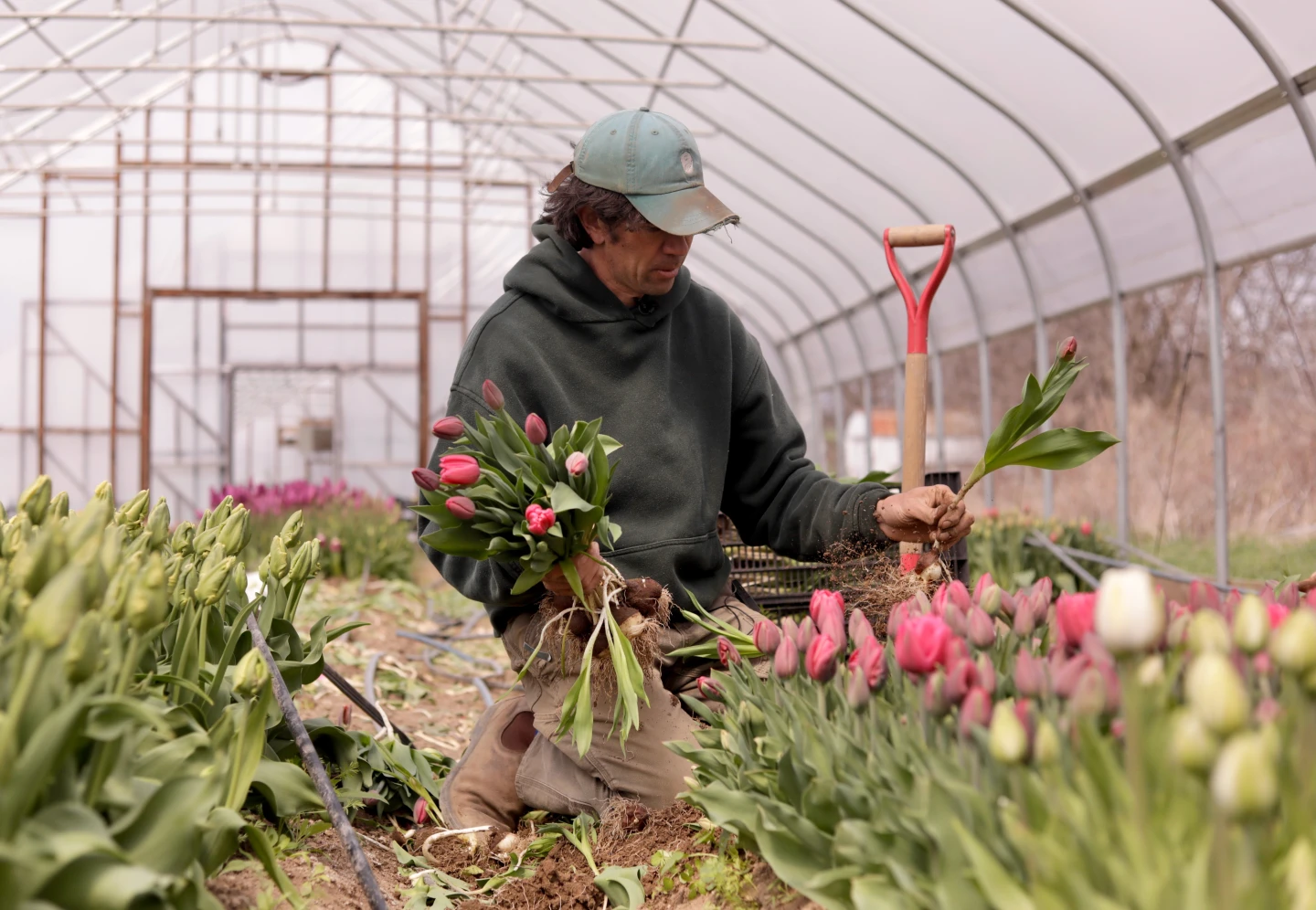
While some crops like apples at Joudrey's orchards appear to hold up relatively well due to smart planting on high ground, flower growers like Gregory Witscher at Understory Farm in Vermont are not so lucky. His tulips have bloomed earlier than expected and are ready for harvest long before Mother's Day, meaning he now must store them in a walk-in cooler to manage their unexpected early arrival.
“We have to harvest them all at the same time and that creates a bit of a logistical nightmare,” said Witscher. “It's increasingly vital for small farms to adapt to these unpredictable weather patterns by having the right tools and resources on hand.”
This situation is raising alarm among farmers in the region, as they grapple with a rapidly changing climate. With the unpredictability of recent weather patterns, many are emphasizing the importance of flexibility in their farming practices to mitigate the risks that accompany severe weather fluctuations.