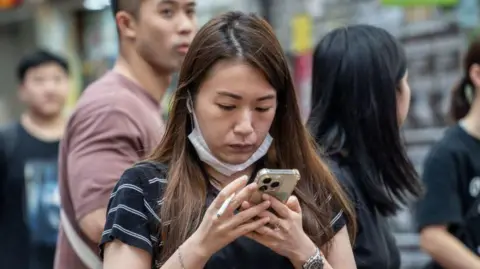
Hong Kong police can now demand phone or computer passwords from those who are suspected of breaching the wide-ranging National Security Law (NSL). Those who refuse could face up to a year in jail and a fine of up to HK$100,000 ($12,700; £9,600), and individuals who provide 'false or misleading information' could face up to three years in jail. This announcement comes as part of new amendments to a bylaw under the NSL that the government gazetted on Monday. The NSL was introduced in Hong Kong in 2020, in the wake of massive pro-democracy protests the year before. Authorities assert that these laws are essential for maintaining stability, while critics contend that they are instruments for suppressing dissent.
The new amendments also empower customs officials to seize items deemed to hold 'seditious intention'. These legislative changes were announced by the city's leader, John Lee, without going through the legislative council.
While many countries grant law enforcement the authority to demand access to electronic devices during criminal investigations, the NSL covers a broad spectrum of vaguely defined offenses, including secession, subversion, terrorism, and collusion with foreign forces.
Moreover, the NSL can facilitate closed-door trials, which have led to the arrests of hundreds of protesters, activists, and former opposition lawmakers since its implementation. Recently, cases involving jailed activists and significant sentences for media figures under the NSL have highlighted growing concerns over press freedom and civil rights in Hong Kong.}
The new amendments also empower customs officials to seize items deemed to hold 'seditious intention'. These legislative changes were announced by the city's leader, John Lee, without going through the legislative council.
While many countries grant law enforcement the authority to demand access to electronic devices during criminal investigations, the NSL covers a broad spectrum of vaguely defined offenses, including secession, subversion, terrorism, and collusion with foreign forces.
Moreover, the NSL can facilitate closed-door trials, which have led to the arrests of hundreds of protesters, activists, and former opposition lawmakers since its implementation. Recently, cases involving jailed activists and significant sentences for media figures under the NSL have highlighted growing concerns over press freedom and civil rights in Hong Kong.}