In brief
NASA has sent a robotic rescue craft, LINK, to intercept the rapidly decaying Swift telescope before it re‑enters Earth’s atmosphere. The three‑armed probe, built by Katalyst Space Technologies in less than a year, will dock, grasp, and gently lift Swift back to a stable orbit. The operation is unprecedented and carries high risk, yet the scientists consider the Swift observatory’s scientific value worth the gamble. If successful, the rescue could pave the way for similar missions to protect other iconic space telescopes.
Nasa-funded spacecraft has been sent into space to catch a falling telescope.
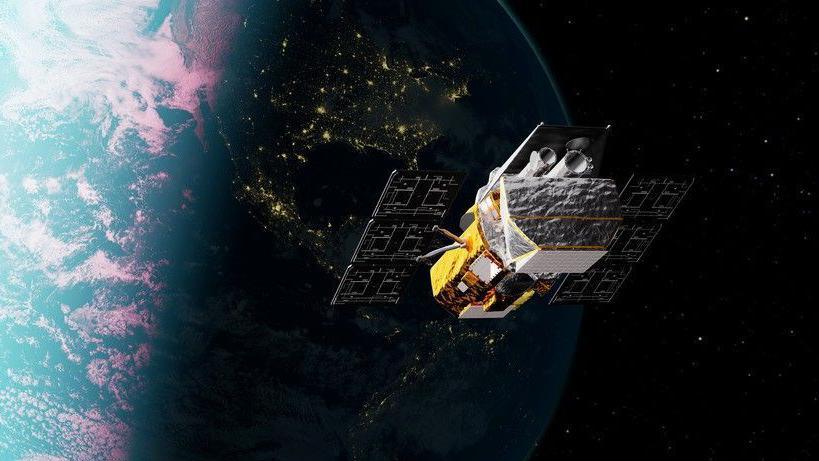
Artist's impression of the Swift observatory that was built to study the cosmos.
The Swift observatory, which detects powerful cosmic explosions, is on a declining orbit due to solar activity expanding Earth’s atmosphere. Its altitude has dropped from 600 km to about 360 km over the past two years, threatening a re‑entry.
To avert a crash, NASA has commissioned the LINK spacecraft, built by Katalyst Space Technologies. LINK is a three‑armed robotic probe, almost the size of a fridge, equipped with cameras, guidance systems and thrusters.
Launched on a Pegasus XL rocket, LINK will conduct a series of calibration checks before maneuvering into Swift’s orbit. It will slowly align itself, photograph the satellite from all angles, then extend its robotic arms to grasp the ageing telescope.
If successful, LINK will fire its engines gently, raising Swift back to a stable 600‑km orbit. The entire operation has never been attempted before and carries high risk, but the scientific value of Swift is immense.
Engineers had less than a year to design, test and launch LINK before Swift fell below 300 km, at which point a rescue would be impossible. Katalyst’s CEO Ghonhee Lee praised the team’s extraordinary achievement.
Once Swift is secured, the focus may shift to even bigger rescue missions, such as the Hubble telescope.
Stay tuned for live updates.