In brief
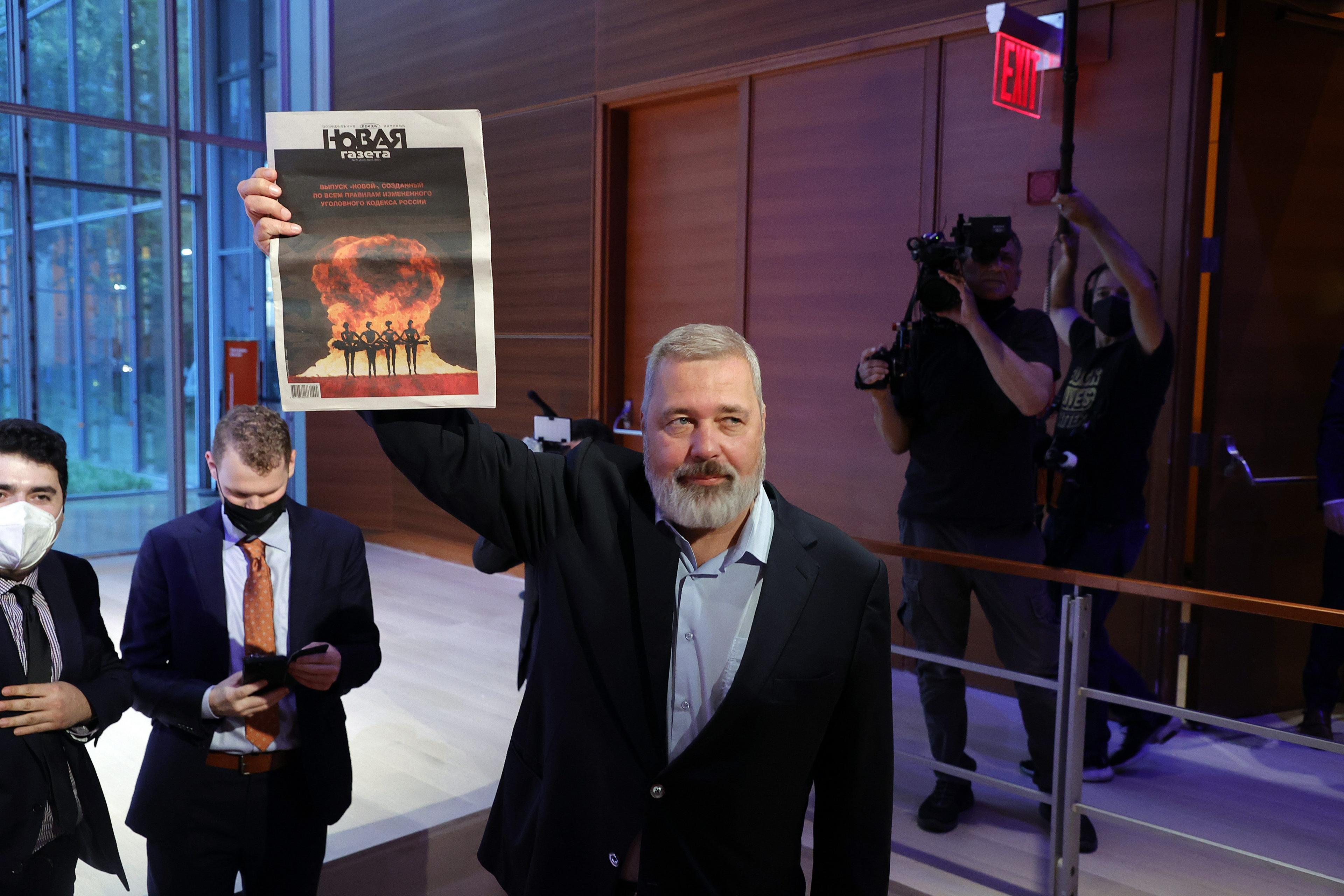
Nobel Peace Prize winner Dmitry Muratov has warned that Putin can no longer claim victory in the war with Ukraine, arguing that the conflict is doomed to be a crime of mass suffering rather than a triumph. He recounts how Novaya Gazeta, the independent newspaper he co‑founded, was shut down by state decree and its website blocked, yet the outlet persists online through VPNs. Muratov cites the surge of political prisoners – some 1,500 since 2022 – and dozens of journalists jailed on extremist charges. He also details the danger faced by critics, including the Russian poet‑musician Pavel Kushnir who died while protesting the war. Muratov urges the global community to remember the plight of political prisoners and keep press freedom alive in Russia.
Putin can no longer claim victory in Ukraine, Nobel Peace Prize winner tells BBC
In a stark interview at the deserted Moscow offices of Novaya Gazeta, Nobel laureate Dmitry Muratov delivers a chilling verdict: President Vladimir Putin’s claim of a victory in Ukraine is no longer viable.
The corridors of the newspaper’s building are silent, echoing a state of emptiness that mirrors the fate of the publication itself. Muratov, who co‑founded the outlet over three decades ago, reports that the Kremlin issued a decree nationalising the presses and revoking the paper’s registration. Although Novaya Gazeta still exists online, the site can be accessed only from abroad or via VPN – a testament to the tightening clampdown on independent media.
His Nobel Peace Prize, awarded in 2021 for safeguarding freedom of expression, did not shield that vulnerability. Six of the newspaper’s journalists – including famed contributor Anna Politkovskaya – were murdered, and twenty‑plus others now face detention or “foreign agent” labels.
Since Russia’s full‑scale invasion of Ukraine, the number of people imprisoned for speaking out has surged to at least 1,500, thrice the losses during the KGB era. Muratov points to the stark statistics of political prisoners, underpinning the message that the war has become an atrocity rather than a triumph.
The war’s toll extends beyond the battlefield; seven journalists, including Antonina Favorskaya, Konstantin Gabov, Sergey Karelin and Artyom Kriger, were convicted of extremism for questioning authority. Muratov himself, now deemed a “foreign agent,” has faced house arrest and police searches of his office. He shares photographs of these defendants, offering a stark visual record of repression.
In a powerful gesture, Muratov auctioned his Nobel Prize medal to raise funds for UNICEF’s aid to Ukrainian refugees, underscoring his continued commitment to human rights.
He urges the international community to focus not only on conflicts but also on the millions of political prisoners in Russia. Muratov concludes that while the country may protect certain narratives, the truth remains: the war cannot be termed a “victory.” He calls for global attention to the ongoing persecution of dissenters and calls on governments to uphold the values of free speech.