In brief
Mulatu Astatke, a pioneer of Ethio-jazz and revered Ethiopian musician, performed his last live concert in London at the age of 82. Known for fusing traditional Ethiopian music with jazz, Astatke's influence spans decades, with his melodies reaching a global audience. His final performance was a poignant celebration of his legacy as fans paid tribute to the man who transformed Ethiopian music on the world stage.
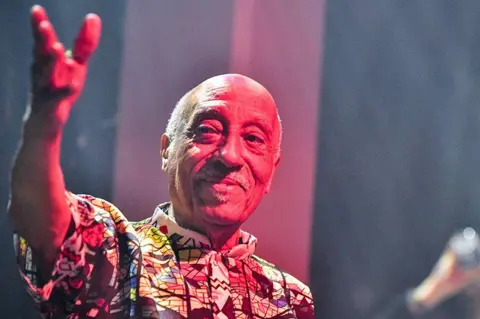
Ethiopian jazz musician Mulatu Astatke smiled as he held his arms aloft to acknowledge his audience for the last time.
Last month in London, the 82-year-old pioneer, who has done much to bring his blend of musical styles to the world, played his final live concert after a six-decade performing career.
Twenty years ago, he gained a wider listenership after the soundtrack for the 2005 Hollywood film Broken Flowers included his music, and the use of one of his recordings in last year's best-picture-Oscar-nominated Nickel Boys saw further interest.
But since the 1960s he has used the studio and rehearsal room as a laboratory where he has mixed musical styles to create what he calls the science of Ethio-jazz.
Outside, it was a cold November evening, but inside the West End venue, Mulatu was bathed in the warm embrace of a crowd eager to get one last glimpse of this alchemist at work.
Dressed in a shirt featuring work by Ethiopian artist Afework Tekle, he slowly and steadily walked on stage.
Squeezing past a set of congas he came to his signature instrument – the vibraphone.
With two pink-felted mallets in his right hand and one in the left, he began to pick out the mesmeric rhythm and melody, expertly striking the xylophone-like metal bars creating a delicate, resonant sound.
The first song was based on a 4th Century tune from the Ethiopian Orthodox church, a nod to his musical heritage and the Ethiopian pentatonic scale that gives his sound its unique flavor when combined with other jazz traditions from around the world.
After the concert, Mulatu expressed gratitude for the experience, stating it was a beautiful show. He reflected on his profound impact on Ethiopian music while remaining humble about the finality of his touring career. Musician Dexter Story called the event bittersweet, touched by the vibrant energy Astatke brought to the stage.
Born in 1943 in Jimma, Ethiopia, Mulatu's journey into music began in his youth. He transitioned from aspiring engineering student to musician at Lindisfarne College in Wales, eventually studying at Berklee College of Music in the US, where he crafted the unique Ethio-jazz sound that would resonate globally.
As he closes this chapter of live performances, Mulatu Astatke vows to continue sharing Ethiopian music with the world, ensuring his legacy will endure.