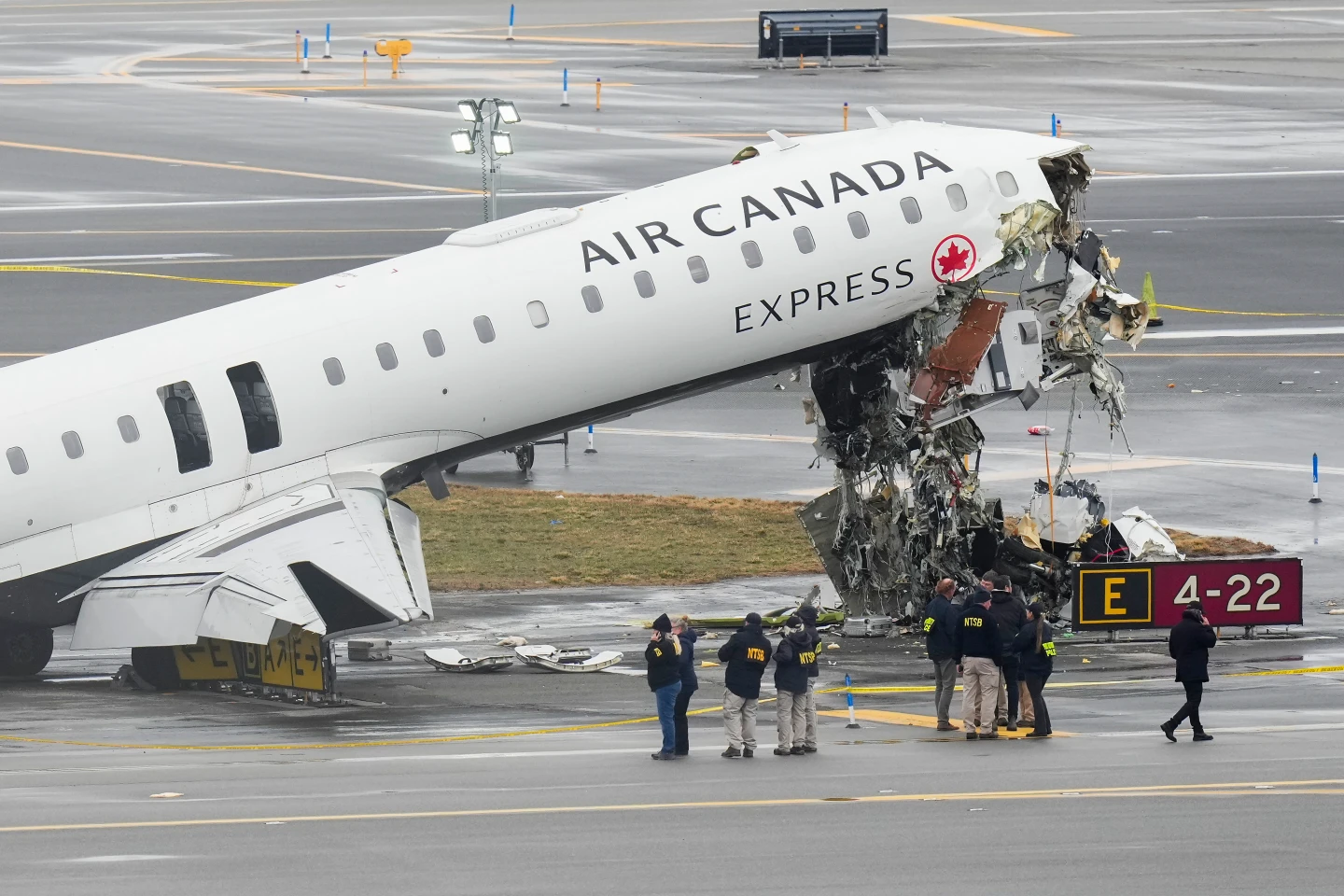
NEW YORK — In an astonishing survival story, Solange Tremblay, a flight attendant for Air Canada, was ejected from a plane during a catastrophic collision at LaGuardia Airport this past Sunday. The incident occurred when the aircraft was landing and struck a fire truck responding to another emergency on the runway.
The outcome left Tremblay with multiple fractures in her leg, for which she requires surgery, but her recovery remains a point of celebration for her family. Her daughter, Sarah Lepine, describes the survival as a 'total miracle,' indicating how fortunate her mother was to be buckled in with the four-point restraints designed for crew members during the collision.
Aviation safety expert Jeff Guzzetti labeled her survival miraculous, especially considering the severe destruction of the aircraft's nose in the crash. He explained that flight attendants are secured in jump seats, which are highly reinforced to ensure their safety during emergencies, allowing them not only to survive but to assist passengers in evacuating the aircraft.
Tragically, both the pilot and copilot were killed in the crash, underscoring the severe consequences of the accident. Tremblay's case highlights the crucial role of safety mechanisms in aviation, particularly for crew members who are essential during critical emergencies.
As authorities investigate the incident, the aviation community reflects on the lessons learned from previous accidents, such as the Asiana Airlines crash in 2013, where flight attendants were also injured similarly, leading to discussions on aviation safety protocols.
This incident serves as a reminder of the inherent dangers in aviation but also the robust safety measures designed to protect airline crew and passengers alike.