
In brief
The roaring blaze that scorched the village of Le Porge not only destroyed 180 homes but also exposed a hidden cache of 400 World War II shells—German and French munitions—laid beneath the soil for decades. Residents heard the boom of explosions as heat detonated the buried ordnance, prompting a delayed de‑mining operation. While de‑mining teams cleared most areas, significant zones, including coastal stretches and local campsites, remain off‑limits. French Prime Minister Sébastien Lecornu praised firefighters for turning a devastating crisis into a “new phase,” as the national response to the country’s worst fire season of record continued. The discovery underscores the lingering dangers of war remnants amid unpredictable environmental disasters.
Wildfires in the south of France have revealed a cache of 400 historic shells and munitions in the village of Le Porge, according to local authorities.
Blasts during the fires, initially thought to be exploding gas cylinders, may have been World War II explosives detonated by the heat, the local fire commander said to the media.
More than 100 explosions were heard on the second night of the fire, Mayor Martial Zaninetti told France Info, likening the sound to a “war.”
Demining operations have now seen most residents return to their homes, but certain areas remain off‑limits. Over 180 houses were destroyed by the wildfire.
The mayor added, “There were ammunition depots buried in the land within our municipality, but we didn’t know it, and they exploded.” He described blasts going “to the right, to the left,” and noted that one went through a house.
On Monday, French Prime Minister Sébastien Lecornu thanked firefighters for their efforts, saying, “France has stood firm in the face of an unprecedented crisis.” He highlighted that the battle against the fires had entered a “new phase,” with evacuated residents gradually returning home.
The fires have raged across Europe for two weeks, causing the evacuation of more than 330,000 people in France and Spain. France’s 42,000 hectares burnt represent one of the largest forest fires since World War II.
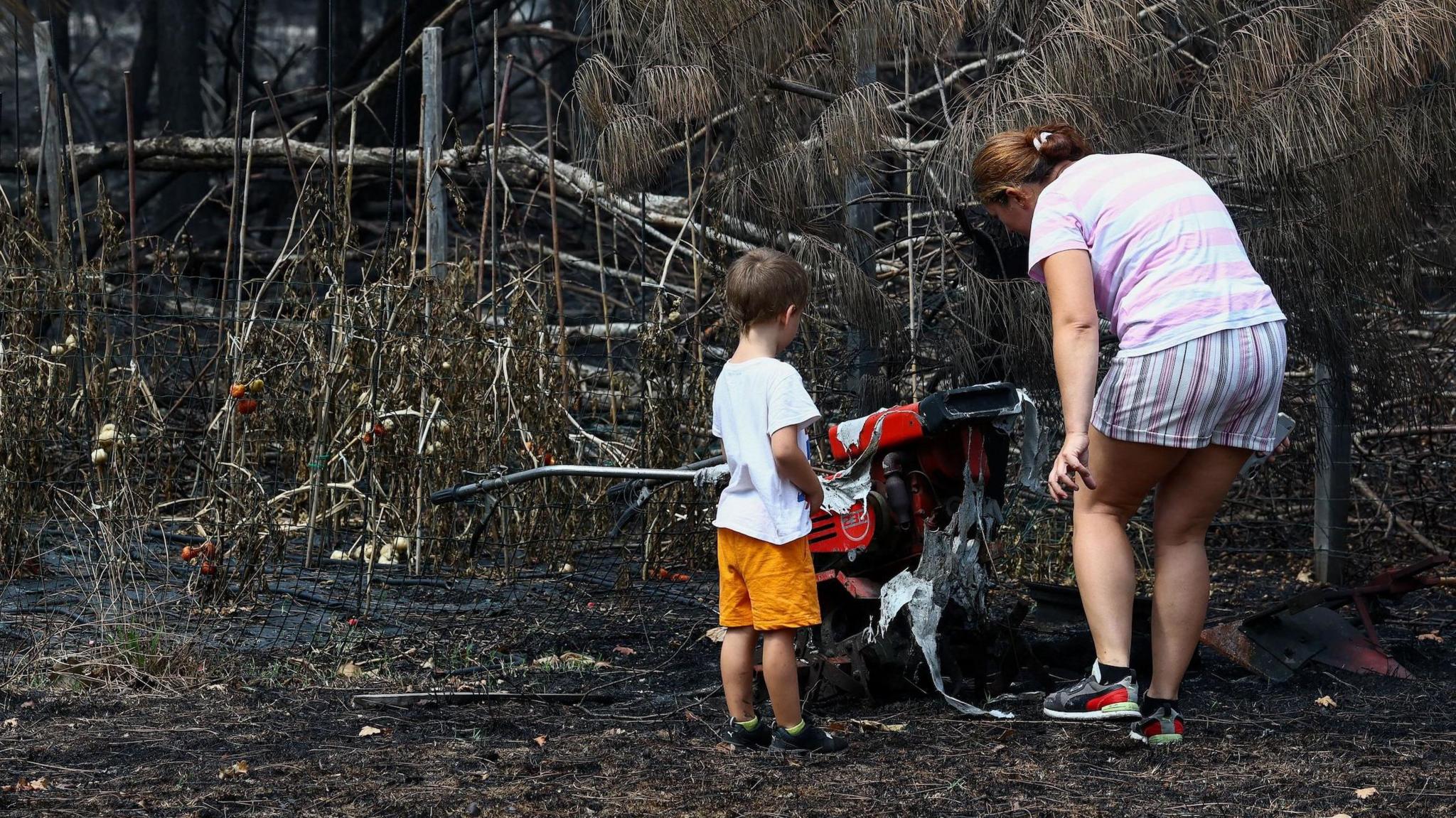
Pictures show families picking through the burned remains of their homes. The historic weapons, both German and French, included mortar shells and anti‑tank shells.
For visual context, a satellite image shows damage to homes and forests around Le Porge.
