As Indiana awaits a crucial vote on redistricting, state senators find themselves at the center of political turmoil spurred by Donald Trump's latest demands. Scheduled for Thursday, this pivotal decision follows months of pressure aimed at reshaping congressional districts.
Despite direct pressure from the White House and threats against lawmakers, a significant portion of Indiana Republicans remain hesitant to endorse a redistricting map designed to favor GOP candidates ahead of the 2026 elections. The proposed map, drawn by the National Republican Redistricting Trust, seeks to secure all nine congressional seats for Republicans in Indiana, reinforcing the party's majority, which currently holds seven of the nine seats.
Redistricting mid-decade, a practice generally considered uncommon, is being urged by Trump as a strategy to create more competitive districts before the upcoming elections. Throughout the country, the stakes are high as both parties prepare for potentially pivotal midterm elections, with Democrats gaining confidence after recent electoral successes.
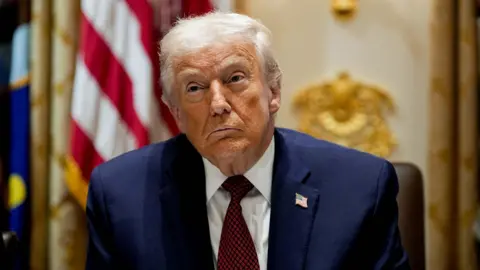
Trump has openly criticized party members who hesitate to comply with the redistricting agenda, threatening to support primary challengers against them. He asserted on social media, “If Republicans will not do what is necessary to save our country, they will eventually lose everything to the Democrats.”
The new redistricting plan would significantly alter the political landscape in Indiana, particularly impacting the city of Indianapolis, which will be divided into four different districts that extend into surrounding rural areas. This transformation aims to dilute the influence of Democratic strongholds like U.S. Rep. André Carson's district, jeopardizing urban representation.
While three Republican senators have signaled potential opposition to the redistricting proposal, the majority in the chamber, needing at least 25 votes to proceed, hinges precariously on undecided votes from a relatively small group. The upcoming vote could defy Trump’s influence, marking a possible turning point in Indiana's legislative landscape.
As national conversations surrounding redistricting unfold across various states, Indiana's situation remains under scrutiny, especially with threats from Republican factions to support primary challenges against those opposing the proposed map. With political dynamics shifting rapidly, every decision will contribute to the broader narrative leading into the midterms.