In brief
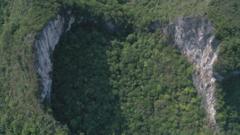
The majestic sinkholes of Guangxi province are attracting adventurous tourists while simultaneously posing risks to irreplaceable ecosystems hidden within.
In Guangxi province, southern China, majestic sinkholes known locally as “tiankeng” have transformed into a remarkable tourist destination, attracting thrill-seekers from across the country. Below these astounding limestone cliffs lies a treasure trove of untouched ecosystems, ancient forests, and undiscovered species that have been preserved for thousands of years—a hidden world that has only recently come to light.Historically, fear of the unknown kept locals away from these breathtaking geological formations, believed to hide spirits and demons. However, modern exploration utilizing drones and brave adventurers has shed new light on this geological phenomenon, revealing what many refer to as a “heavenly pit.” Indeed, China is home to about two-thirds of the world’s 300 sinkholes, with Guangxi boasting the highest number.Visitors are now drawn to experience the exhilaration of descending into these losses filled with life. One such visitor, 25-year-old Rui, stands on the precipice, excitedly preparing to plunge into the depths with her partner Michael. Their guide, Fei Ge, fondly known as Brother Fei, shares his childhood stories of fearing these very caves and his eventual obsession with exploring their hidden ecosystems. With years of experience guiding tourists and scientists alike, he recalls the awe of discovering new plant species alongside researchers who were equally astonished by what they found.Scientific interest surrounding these caverns centers on their unique ecosystems, which provide crucial insights into species that once thrived long ago. In recent explorations, researchers unearthed previously unknown organisms, including orchids and cave-dwelling creatures. The encapsulated environments within sinkholes provide a natural laboratory, where scientists can study both ancient life and the impacts of climate change.While the exploration of sinkholes has undoubtedly brought economic benefits to nearby communities like Ping’e, where tourism is developing, concerns arise about the ecological consequences of increased foot traffic. Researchers emphasize the importance of safeguarding these rare habitats as the boom in tourism promises both opportunities and challenges for conservation efforts.Dr. Lina Shen, a prominent sinkhole researcher, advocates for preserving the unique species that call these ecological wonders home and suggests strategies for balancing tourism with the conservation of these delicate environments. She highlights the need for strict regulations to limit human impact while allowing public access. Meanwhile, Brother Fei stresses the importance of protecting these natural resources, which have dramatically shaped his life and livelihood.As adventurous couples like Rui and Michael abseil into the depths of Guangxi's cavernous wonders, they are reminded of the fine line between enjoyment and the preservation of biodiversity. With each descent into these ancient ecosystems, they carry with them the weight of responsibility—the desire to marvel at nature's beauty while ensuring its survival for generations to come.