In brief
The issuance of war crimes warrants signals a significant shift in international legal proceedings, raising questions about compliance from member states.
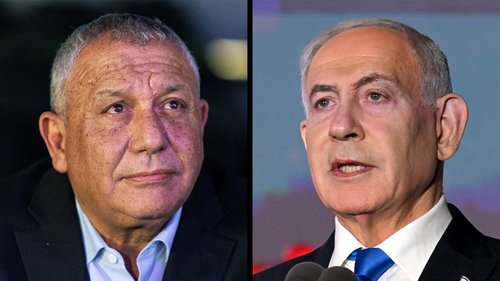
In a groundbreaking move, the International Criminal Court (ICC) has issued arrest warrants for Israeli Prime Minister Benjamin Netanyahu and his former defense minister, Yoav Gallant, marking the first instance where leaders of a contemporary Western democracy face accusations of war crimes and crimes against humanity from a global judicial body. This unprecedented action serves as a pivotal diplomatic milestone, particularly for nations in the Global South, who may interpret it as a sign that international institutions are no longer merely instruments of Western influence.Although the United States and Israel are not signatories to the ICC, more than 120 countries are, meaning they are formally required to arrest Mr. Netanyahu and Mr. Gallant should the accused enter their territory, even inadvertently, such as through an unscheduled landing. Philippe Sands, an expert in international law, emphasized that “the warrants are binding on all parties to the I.C.C." and that countries have an obligation to act should these individuals set foot within their borders.However, past instances suggest that compliance can be contingent upon the geopolitical dynamics at play. For example, Mongolia, a member of the ICC that relies heavily on Russia for energy, welcomed its president, Vladimir Putin, despite his indictment for war crimes tied to the Ukraine invasion. Meanwhile, South Africa sidestepped a similar dilemma concerning Putin by deciding against his attendance at a major summit.Interestingly, Brazilian President Luiz Inácio Lula da Silva hinted that Putin could safely attend the upcoming G20 summit in Rio, a claim Putin countered by sending his foreign minister instead. As Netanyahu contemplates future engagements, the implications of these ICC warrants extend far beyond the courtroom and could reshape international protocols in coming months.