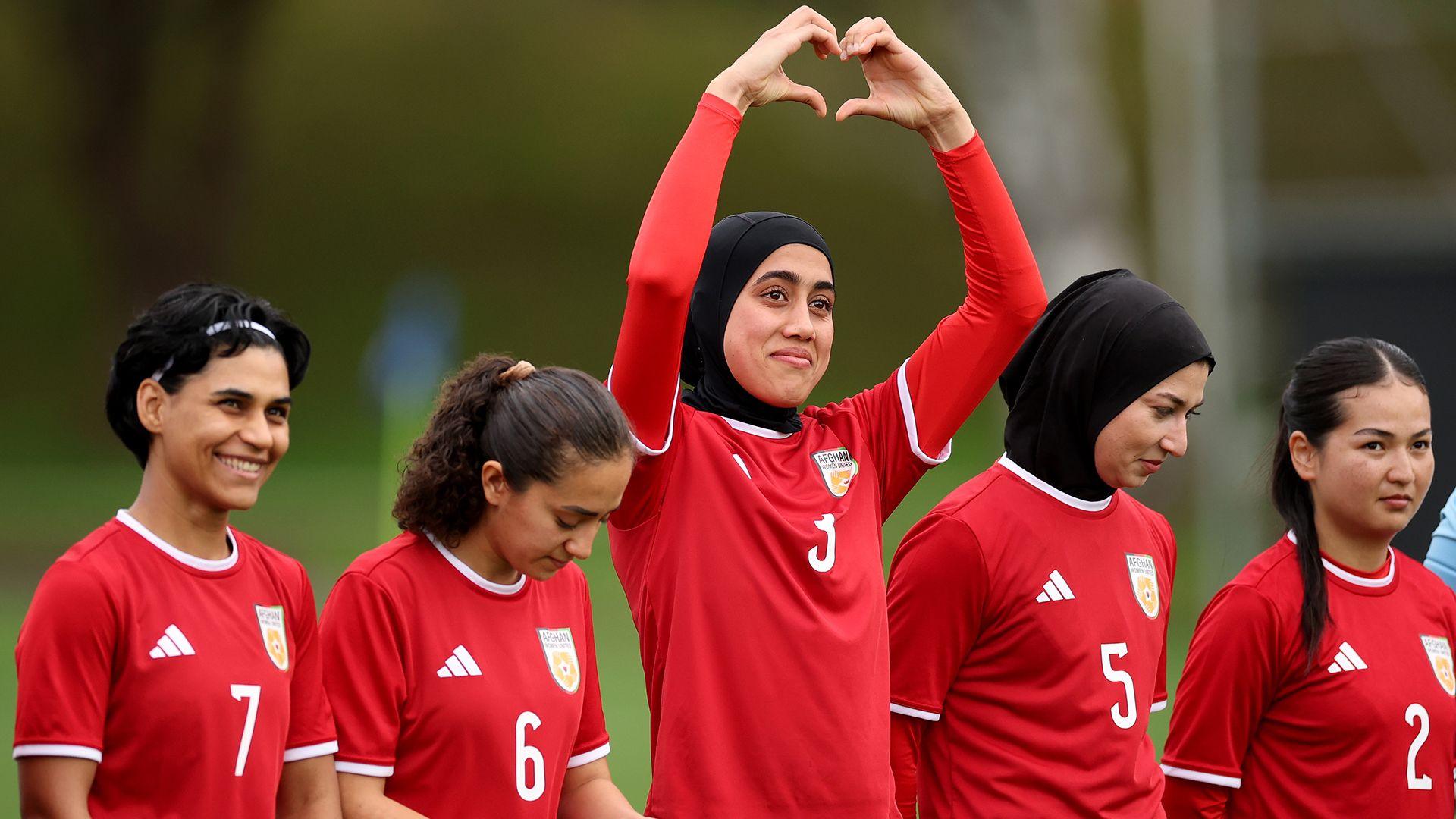
The Afghan women’s football squad has spent the last decade fighting to stay on the field. With FIFA’s mandate in April, they finally broke out of the shadow cast by the Taliban, gathering in Auckland, New Zealand, for an unprecedented training camp and two friendly fixtures against the Cook Islands.
In the locker room a vibrant orange‑red kit draped the shoulders of twenty‑three players that have been split among Australia, the United Kingdom and Portugal. A manifesto of solidarity filled the air as midfielder Fatima Haidari shouted, “Be strong, we are representing Afghan women.” The Afghan flag hung above the voices, a national anthem echoing through the space.
The team’s journey began when the Taliban reclaimed power in August 2021, who prohibited women from schools, universities, and organised sport. Afghan Women United evolved from a refugee team representing exiled players, leading to FIFA recognition—yet no longer dependence on the Afghanistan Football Federation’s permission.
One key player, 23‑year‑old Manozh Noori, raised her medal collection in a Kabul garden before fleeing. Now in Australia, she tells of the trauma over the years, the scarce support for her brothers, and the eventual ability to bring her family abroad. Her story seen in a quiet scene in Auckland underscores the discipline both on and off the pitch.
Another story is that of Mursal Sadat, a 24‑year‑old coach who left Afghanistan with the “Olympic dream.” Living in Doncaster, England, she balances football, advocacy for refugees and human rights, and faces the weight that millions of Afghan girls remain denied the same freedoms.
The friendly matches delivered conceding goals to the Cook Islands (1‑0 and 3‑0), but for the Afghan squad the results were symbolic—a foothold back on the field, the validation of a FIFA licence that acknowledges their potential to compete in World Cup or Olympic qualifiers. The players’ spirits didn’t waver as they faced the Auckland drizzle; they had weathered far harsher conditions at home, including toddlers training in temperatures above 45 °C.
Despite the setbacks, each player carries the story of resilience, determination and the hope that their participation could inspire Afghan girls far beyond the football pitch. As the national anthem plays each evening, there is a quiet certainty that the road ahead, however long, is no longer barred by restrictions.