Sudan's paramilitary Rapid Support Forces (RSF) has been trying to cover up mass killings in the city of El-Fasher by burying and burning bodies, a research team from Yale University reports. The RSF faced international backlash amid allegations of executions and crimes against humanity when they captured the city in October.
Satellite imagery analyses conducted by Yale's Humanitarian Research Lab (HRL) indicate that the RSF likely disposed of tens of thousands of bodies following their takeover of El-Fasher. While the RSF has not yet responded to these claims, their leader previously acknowledged some violations by his fighters in the city.
The HRL's report describes the RSF as engaging in a systematic, multi-week effort to eliminate evidence of mass killings, confirming that this pattern of body disposal is ongoing. The paramilitary group has been in conflict with Sudan's regular army since April 2023, igniting a brutal civil war.
Documentation of the violence in El-Fasher includes satellite evidence indicating that RSF operations have severely restricted civilian movement since the city was captured. Following widespread criticism, RSF leader Gen Mohamed Hamdan Dagalo initiated an investigation concerning alleged military violations during the control of El-Fasher, yet the group continues to refute claims that their actions are ethnically motivated against non-Arab populations.
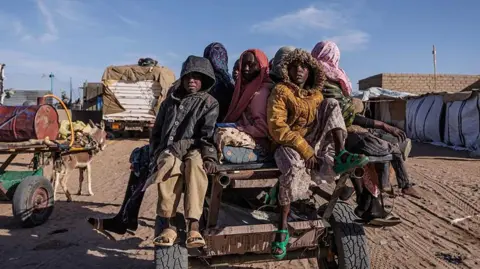
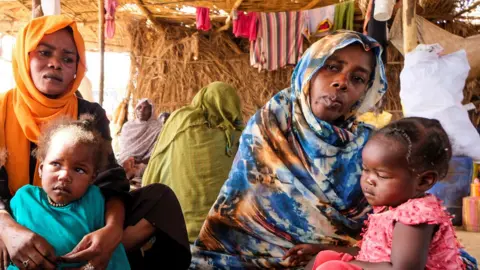
UN figures estimate that around 250,000 people remain trapped in El-Fasher, with many displaced and living in camps after violence disrupted their lives. It has been revealed that the RSF managed to consolidate its power in western Sudan, significantly impacting the dynamics of the ongoing conflict.
Reports from the UN label the conflict as the world's worst humanitarian disaster, with approximately 13 million individuals displaced since April 2023, compounding the plight of civilians caught in the crossfire.