In brief
India’s Prime Minister Balendra Shah used his UNGA address to spotlight climate‑related disasters in the Himalayas, proposing a joint Himalayan Climate Resilience Mechanism. He called for shared data, expertise and early‑warning systems among Nepal, India and China. The region faces accelerating glacier melt, glacial lake outburst floods, and landslides that cross borders. While diplomatic ties have thawed recently, historic territorial disputes and concerns over strategic data sharing keep the proposal in its infancy.
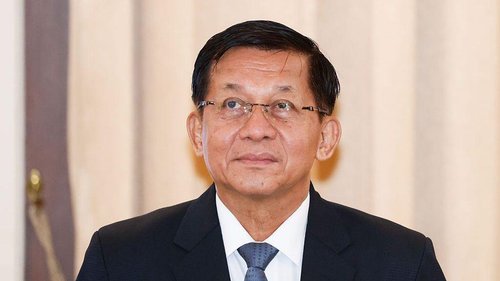
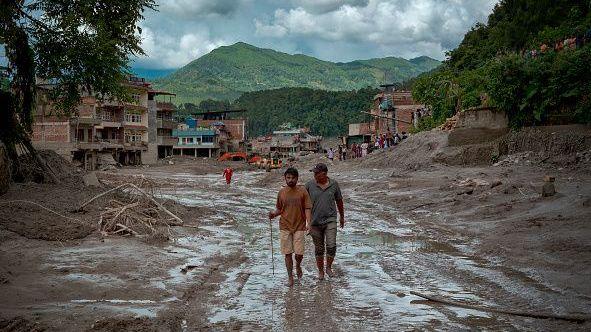
During the 81st UN General Assembly, Nepal's Prime Minister Balendra Shah warned of a growing wave of climate‑related disasters in the Himalayas, after the devastating debris floods that hit Trishuli in August. He urged India and China to join forces, proposing a Himalayan Climate Resilience Mechanism to share scientific data and coordinate disaster response.
The proposal was grounded in stark science: glacier loss in the Hindu Kush–Himalaya has doubled since 2000, and the Qinghai‑Tibet Plateau now hosts more than 14,000 glacial lakes. Melting ice expands these lakes, raising the risk of glacial lake outburst floods and landslides that can wipe out communities across Nepal, India and Bhutan.
India and China have long contested a roughly 3,500‑km frontier, with frequent stand‑offs along the Line of Actual Control. Yet their environmental interests overlap in a fragile region where flood‑early‑warning systems could save thousands of lives. The two powers have reached limited agreements on data sharing for rivers like the Brahmaputra and Sutlej, but recent pauses—China halted Brahmaputra data in June 2023 and India stopped receiving Sutlej data in 2022—highlight ongoing mistrust.
Past attempts at collaboration, such as the 2009 joint glacier‑research initiative, stalled after a single meeting. Analysts note that while high‑level political engagement has eased, the core obstacle remains the sensitive nature of hydrological data, which can have strategic military value.
Nevertheless, experts see a glimmer of hope. New trade talks and increased diplomatic contact suggest room to explore climate‑focused cooperation, especially if data‑sharing protocols focus on low‑risk information and immediate warning exchange. Whether India and China will commit to such measures remains uncertain, but for Nepal, convincing its two powerful neighbors to set aside territorial quarrels could be pivotal in turning a shared threat into a region‑wide opportunity.
Image Credit: Getty Images