In brief
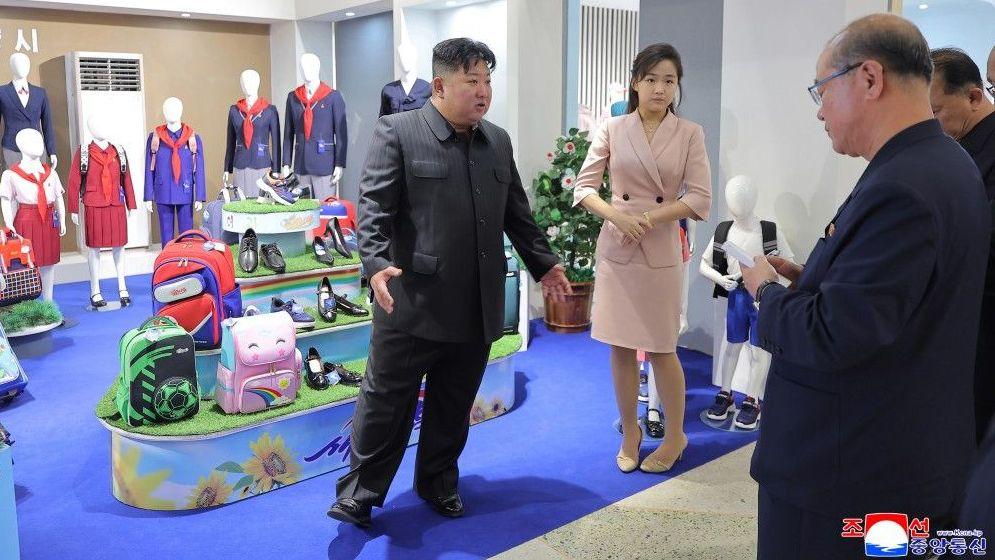
North Korean President Kim Jong Un was shown in recent state media photographs strolling through a clothing exhibition, appearing in good health even as internet rumours of a brain haemorrhage and death circulated. The claims, reportedly made by a Chinese dissident, lacked evidence and drew sharp responses from South Korean intelligence, which found no signs of crisis. The persistent focus on Kim’s health stems from both succession uncertainty—his daughter Kim Ju Ae has risen in prominence—and his known health risks. The story underscores how opaque information flows fuel speculation and why any hint of a leadership vacuum in the Korean peninsula is watched closely by regional powers.
North Korean state media released a series of photographs showing 42‑year‑old leader Kim Jong Un strolling through a clothing and footwear exhibition with his daughter, Kim Ju Ae. The images, posted several hours after internet rumours of his death surfaced, depict the ruler looking markedly healthy.
The death rumours were first circulated by Wanjun Xie, a Chinese dissident living in the United States, who claimed, without evidence, that Kim had suffered a severe brain haemorrhage, was flown to a Beijing hospital in a coma, and had subsequently passed away. Xie also alleged that his body had been secretly returned to Pyongyang, with the regime concealing the death.
In the DPRK’s tightly controlled information environment, fact‑checking is difficult and the vacuum often makes space for speculation. Yet the photos of Kim walking alongside officials and his daughter, examining exhibit displays, immediately contradicted the grim narrative that had taken root online.
No other indicators of a leadership crisis – such as heightened Chinese border security, increased activity at North Korean embassies or a surge in defections – have appeared. South Korean intelligence firms confirmed that they had received no credible reports of Kim’s death, further undermining Xie’s allegations.
Why do death rumours recur, then? The first factor is succession uncertainty. While the Kim dynasty has ruled for three generations, the path from Kim Jong Un to his successor remains unclear. Kim Il‑Sung prepared his son, Kim Jong Il, in advance; Kim Jong Il’s succession was relatively smooth. By contrast, Kim Jong Un’s rise was rapid, and his consolidation of power involved purging rivals, leaving the succession line fragile.
A second factor is Kim’s personal health. He is overweight and a chronic smoker, conditions that heighten the risk of cardiovascular disease – a risk that the South Korean National Intelligence Service has repeatedly warned about. Any sudden loss of the North Korean leader would trigger geopolitical uncertainty: questions over control of nuclear weapons, potential instability on the peninsula and a possible refugee exodus into China.
Given the regime’s tendency to disseminate misleading or incomplete information, rumours that gain traction are often amplified by self‑interest or political motives. Xie’s claims may have been an attempt to embarrass Beijing by underscoring its ties with Pyongyang, or simply an effort to attract attention.
Until independent verification can be obtained, the 24‑hour “death scare” will likely fade, but the underlying uncertainty surrounding Kim Jong Un’s health and succession will continue to fuel speculation. The international community, especially China, South Korea and Washington, maintains constant vigilance over the Korean peninsula’s stability, ready to respond to any sudden leadership change.