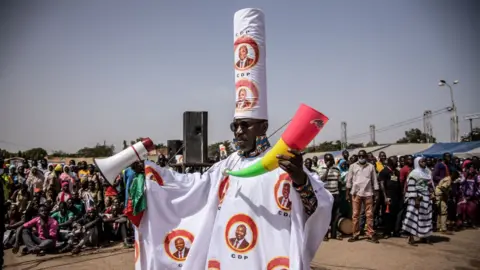
Burkina Faso's junta has announced a ban on all political parties, whose activities have been suspended since the military seized power in 2022.
Junta leader Captain Ibrahim Traoré has been criticised for suppressing dissent and the move will be seen as the latest effort to tighten control. According to Burkina Faso's Interior Minister Emile Zerbo, the ban is part of plans to 'rebuild the state' after stating there were 'numerous abuses' within the multiparty system. Zerbo indicated that the system had been 'promoting division among citizens and weakening the social fabric.'
Previously, parties were banned from holding public gatherings, but this new decree halts their operations altogether. The assets of the dissolved parties will be transferred to the state, with a draft law to be sent to the Transitional Legislative Assembly soon.
Before the coup, Burkina Faso had over 100 registered political parties, with 15 represented in parliament after the 2020 elections. Criticism has emerged regarding the ban, with civil society members expressing concern that this decision would not aid in the country's progress, highlighting the regime's stance against democracy.
Supporters of Traoré argue that the abundance of parties contributed to chaos and corruption, suggesting that unity is essential for governance. However, concerns about the potential for further coups linger, reflecting the instability prevalent in West Africa.
Despite Traoré's pledges to restore a civilian government by July 2024, recent announcements to extend military rule suggest a diverging path.
Burkina Faso, like several other West African nations, has witnessed similar trends of military coups followed by the restriction of political parties and civil liberties. Traoré remains a polarizing figure, attracting both support and criticism across the continent for his leadership style and ideology.