As helicopters circled overhead, sirens descended on her suburb, and people ran screaming down her street on December 14, Mary felt a grim sense of deja vu. That was when I knew there was something seriously wrong – again, she says, her eyes brimming with tears.
Mary - who did not want to give her real name - was at the Westfield Bondi Junction shopping centre in April last year when six people were stabbed to death by a man in psychosis, a tragedy still fresh in the minds of many.
Findings from a coroner's inquest into the incident were due to be delivered this week, but were delayed after two gunmen unleashed a hail of bullets on an event marking the start of the Jewish festival of Hanukkah eight days ago. Declared a terror attack by police, 15 people were shot and killed, including a 10-year-old girl who still had face paint curling around her eyes.
The first paramedic to confront the bloody scenes at the Chanukah by the Sea event was also the first paramedic on the scene at the Westfield stabbings. You just wouldn't even fathom that something like this would happen, Mary, who is originally from the UK, tells the BBC. I say constantly to my family at home how safe it is here.
However, the overarching sentiment in the days following the shooting has been that such mass murder just doesn't happen in Australia. This community is left questioning its safety after suffering two tragedies in the same area within 18 months.
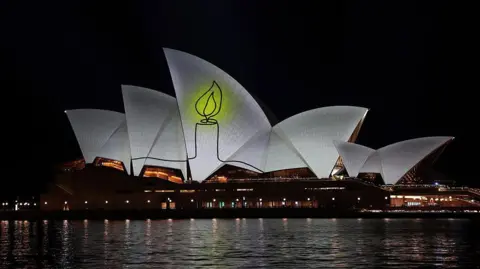
A sea of flowers left by shocked and grieving people in Bondi was being packed up as a national day of reflection came to a conclusion. The two tragedies have left many scarred physically and emotionally.
The Bondi community, characterized by its connections, means that many residents know someone affected by the shooting. Mayor Will Nemesh highlighted the community's deep bonds, stating, Everyone knows someone affected. Unfortunately, the beloved local Rabbi, Eli Schlanger, was among the fatalities.
The healthcare staff that rushed to aid the victims faced catastrophic injuries, reflecting scenes reminiscent of a war zone. The community continues to feel the reverberations of this tragedy, with fears that such violence could happen anywhere in Australia.
The Jewish community, which views Bondi as a sanctuary, has been particularly hurt. Many Jewish Australians had settled here to escape persecution, and now their safety feels threatened. Dr. Zac Seidler, a local psychologist, has been actively fighting to rebuild faith among his family members, many of whom are Holocaust survivors.
In the wake of these tragedies, community responses have revealed unity but also raised uncomfortable questions about antisemitism and security failures. Several residents, including Jewish Australians, believe that warnings about a rise in antisemitism were ignored leading up to the attacks.
As they seek healing and community support, discussions of political responsibility and the repercussions of past warnings have sparked anger and frustration among the community, causing tension against the backdrop of mourning.
The attacks on Bondi Beach serve as a stark reminder of violence's unpredictable nature, while community leaders and residents aspire for a future where kindness prevails over hatred.
Mary - who did not want to give her real name - was at the Westfield Bondi Junction shopping centre in April last year when six people were stabbed to death by a man in psychosis, a tragedy still fresh in the minds of many.
Findings from a coroner's inquest into the incident were due to be delivered this week, but were delayed after two gunmen unleashed a hail of bullets on an event marking the start of the Jewish festival of Hanukkah eight days ago. Declared a terror attack by police, 15 people were shot and killed, including a 10-year-old girl who still had face paint curling around her eyes.
The first paramedic to confront the bloody scenes at the Chanukah by the Sea event was also the first paramedic on the scene at the Westfield stabbings. You just wouldn't even fathom that something like this would happen, Mary, who is originally from the UK, tells the BBC. I say constantly to my family at home how safe it is here.
However, the overarching sentiment in the days following the shooting has been that such mass murder just doesn't happen in Australia. This community is left questioning its safety after suffering two tragedies in the same area within 18 months.
A sea of flowers left by shocked and grieving people in Bondi was being packed up as a national day of reflection came to a conclusion. The two tragedies have left many scarred physically and emotionally.
The Bondi community, characterized by its connections, means that many residents know someone affected by the shooting. Mayor Will Nemesh highlighted the community's deep bonds, stating, Everyone knows someone affected. Unfortunately, the beloved local Rabbi, Eli Schlanger, was among the fatalities.
The healthcare staff that rushed to aid the victims faced catastrophic injuries, reflecting scenes reminiscent of a war zone. The community continues to feel the reverberations of this tragedy, with fears that such violence could happen anywhere in Australia.
The Jewish community, which views Bondi as a sanctuary, has been particularly hurt. Many Jewish Australians had settled here to escape persecution, and now their safety feels threatened. Dr. Zac Seidler, a local psychologist, has been actively fighting to rebuild faith among his family members, many of whom are Holocaust survivors.
In the wake of these tragedies, community responses have revealed unity but also raised uncomfortable questions about antisemitism and security failures. Several residents, including Jewish Australians, believe that warnings about a rise in antisemitism were ignored leading up to the attacks.
As they seek healing and community support, discussions of political responsibility and the repercussions of past warnings have sparked anger and frustration among the community, causing tension against the backdrop of mourning.
The attacks on Bondi Beach serve as a stark reminder of violence's unpredictable nature, while community leaders and residents aspire for a future where kindness prevails over hatred.