In brief
In a bold opening at Singapore’s National University of Singapore, Chizi cracked a joke about China’s leader that earned a roar of applause and a few swearing listeners. The comedian, once a household name in China, was banned in 2023 following overseas appearances that touched on sensitive topics. He has since returned to the stage, launching a cross‑Asian tour that includes Tokyo, Taipei, Kuala Lumpur, and Singapore, drawing sell‑out crowds and revitalising his career. While he retains his sharp wit, Chizi now steers clear of explicit political names, instead using veiled references. The ban has sharpened his perspective on freedom of expression and reinforced his desire to reconnect with Chinese‑speaking audiences around the world.
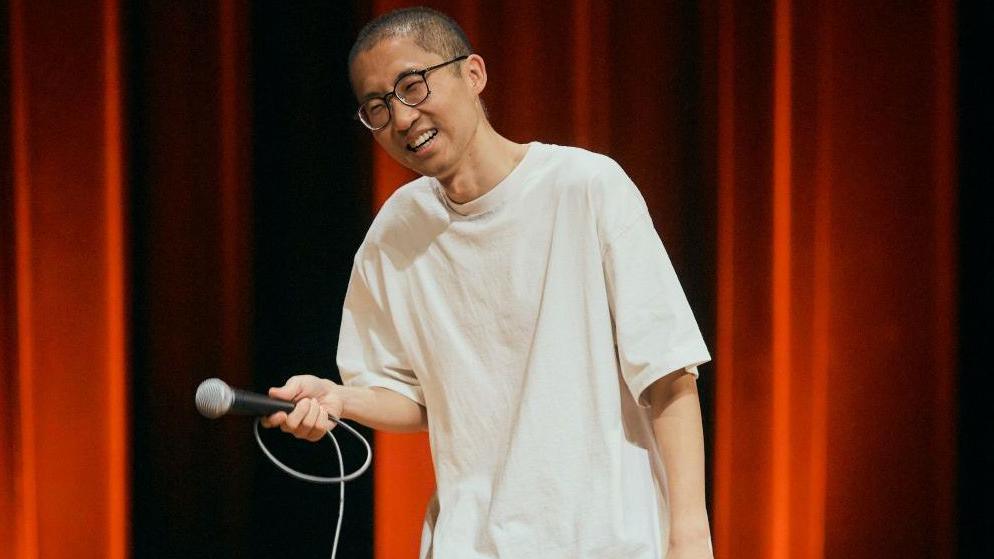
When Chizi opened a show at the National University of Singapore, he started with a joke about China’s leader Xi that drew a roar from the packed auditorium. The laughter, interspersed with approving swearing, highlighted how daring his humour is.
Shortly after, China banned him from performing in the country in 2023, a move that left him effectively silenced at home. Chizi says his face was treated much like a “sexual organ” in China, a metaphor he used on social media after a fan’s account was suspended for posting a photo of him.
To keep his voice alive, Chizi has taken the stage to places where Chinese speakers gather: Tokyo, Taipei, Kuala Lumpur and Singapore. His tour has sold out every show, proving his star power is still strong beyond China’s borders.
He admits his material now layers the political with the personal. When he mentions Xi, he refers to him as ‘Peng Liyuan’s husband’, avoiding the name outright. He also keeps a folder titled “Things I can’t say” filled with lines that would be banned if ever recited in China.
Despite the risk, Chizi says his biggest goal is to perform for Chinese‑speaking audiences and share his life as someone who spent thirty years living in China. “I feel like I'm making five hundred friends at once on stage,” he told the BBC, describing the intimacy he feels with the crowd.
Performing where the political is most fragile
Chizi chose to begin his tour in Taiwan, a hotspot of tension for China. He says he sees no reason to avoid a country that speaks the same language and shares cultural roots. “It might turn into an argument, but that’s fine,” he explains.
From high school dropout to cultural icon
After dropping out of high school in 2015, Chizi began doing stand‑up at open‑mic nights. A break came when he appeared on a popular talk show that was the first to feature stand‑up on TV. He quickly became the face of a brand‑new streaming platform that attracted millions of viewers.
In the past few years, his frustration with censorship grew to the point where he announced a break from Weibo during the pandemic, calling the platform “not carrying joy.” However, he says the pandemic also showed him how much his audience wanted him to speak openly.
Five days after the NUS show, Chizi told the BBC he has no regrets. He said the amusement sector in China now feels “confined” and “shallow.” He hopes to keep touring and perhaps even explore the West in the future.