In brief
A recent decree by Azerbaijan’s education ministry outlawing clothing that conflicts with secular principles has led to widespread protests, as students in hijabs are turned away from schools. The outspoken ban threatens to stoke religious sentiment and has sparked a domestic crackdown that saw 37 arrests, while forcing the government to confront criticism from Turkey. Erdogan’s allies in Ankara have decried the move, urging Baku to reverse its decision, and tensions have risen as Azerbaijan balances relations with Israel and Iran. Meanwhile, activists continue to offer online tutoring to banned students, hinting at a growing resistance movement.
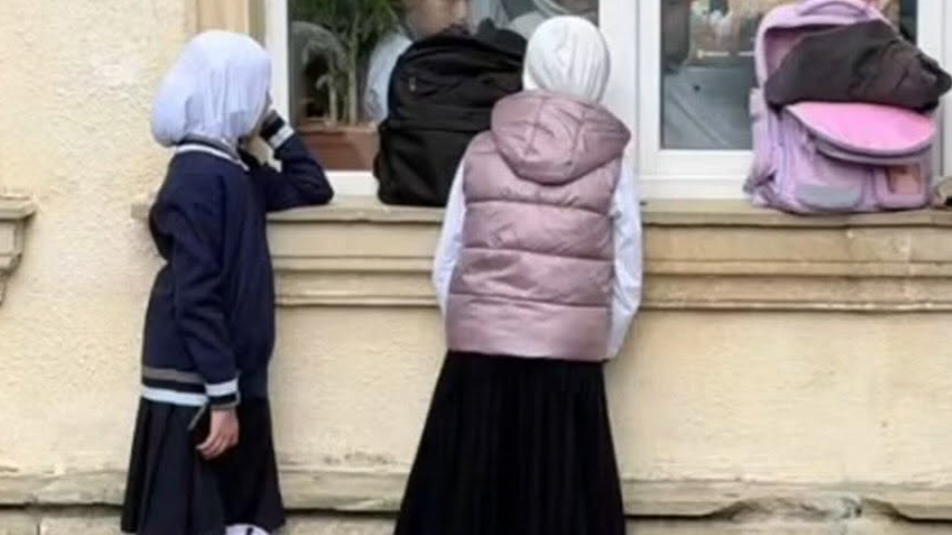
"You are telling me, I can't come to school?" a teenage girl wearing a navy blue Islamic headscarf told a Baku school staff member, broadcasting her protest to the world via a viral video.
The footage shows a squad of hijab‑wearing girls applauding in solidarity as the girl argues that she should not have to surrender her faith to attend school. On Monday the Azerbaijan education ministry steeled its commitment to secularism by enforcing new uniform rules that effectively outlawed the hijab in state schools. The rule, signed on 21 September, has led to students being turned away, prompting demonstrations outside Baku and in southern districts such as Masally and Jalilabad.
The country, which has a population of around 10.5 million, rarely witnesses public dissent. Since 2003 President Ilham Aliyev has ruled with little tolerance for opposition, imprisoning many independent journalists and MPs. The sudden religious crackdown has, therefore, shocked the nation’s citizenry.
Azerbaijan sits between Turkey and Iran—its populations are Turkic and largely Shia Muslims, while Turks are predominantly Sunni. Ankara has slammed the new rules, with Turkish politicians and the president’s adviser calling the ban “unacceptable.” Small, Islamist‑aligned protests have even broken out outside the Azerbaijani embassy in Ankara.
In Baku, activists launched an online platform called "Let Leyli Go to School," offering free lessons to students denied classroom access. However, the platform’s channel was shut down after a napcast by the state’s Special Communications Service and a possible crackdown on the founder, Ilkin Huseynov.
Alongside domestic unrest, cyber‑attacks on Azerbaijani government websites—claimed by a pro‑Iranian group—signal a broader climate of tension. Meanwhile, Turkey’s irritation may also stem from Azehabn’s close ties with Israel, a partner of Azerbaijan’s arms and energy industries, complicating the diplomatic landscape.
The hijab ban has thus become a flashpoint, exposing fissures within Azerbaijan’s society and testing the limits of its authoritarian policy in a region already fraught with geopolitical rivalries.