In brief
In the remote Greater Nammuldi iron ore mine, 300-tonne driverless trucks redefine mining operations. With a focus on safety and productivity, Rio Tinto leads a global trend towards automation while navigating challenges and worker transitions.
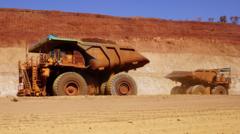
In the heart of Australia's mining industry, Rio Tinto's Greater Nammuldi iron ore mine operates one of the world's largest fleets of autonomous trucks. Nestled in the expansive Pilbara region, two-hour flights from Perth transport around 400 workers at a time to a site marked by the towering presence of driverless vehicles capable of hauling up to 300 tonnes of ore. The scale and technology behind these trucks are nothing short of revolutionary, yet they are powered by a team of professionals working remotely to ensure safety and coordination. During a recent exploration of the mine, the sight of a massive driverless truck maneuvering along rugged roads made for a sobering experience. Rio Tinto has successfully implemented over 50 autonomous trucks throughout the mine, in addition to experimenting with a self-operating dust control water cart nicknamed "Henry". Each truck’s movement is meticulously programmed, ensuring they operate on predefined paths devoid of human drivers. To facilitate safe human-vehicle interactions, the company has integrated advanced GPS systems into their vehicles, allowing them to operate within a virtual space that keeps them visible to each other. Controllers stationed at Rio Tinto's Operations Centre in Perth oversee the fleet autonomously, managing over 360 self-driving trucks alongside autonomous drills and rail networks spanning multiple mines.The push towards automation began in the late 2000s, positioning Australia as a leader in employing autonomous technology in mining. With the safety of workers as a primary focus, Rio Tinto has noted a significant decline in workplace accidents in conjunction with increased productivity—an estimated 15% rise—thanks to the autonomous operations that reduce downtime during shift changes. Initial concerns about job displacement have also been addressed, as the transition from traditional roles to control and management of automated systems means most workers have been redeployed rather than laid off. Stories abound of workers shifting from manual labor to operating sophisticated control systems, highlighting an evolving workforce amidst advancing technologies.However, experts in the field underscore the importance of constant improvements in human-technology interaction to ensure worker safety. Insights from studies suggest that while automation does enhance safety and efficiency, it can inadvertently lead to overconfidence among workers when interacting with such technologies.As Rio Tinto continues to refine and expand its automation strategies, recent challenges, including a backlash from staff when communication systems faltered during a significant incident, illustrate the complexities introduced by automating processes that necessitate diligent oversight. Classified materials such as shifts in design for autonomous excavators and loaders remain on the horizon, promising to further innovate the mining industry's future.In this remote corner of Western Australia, as the sun sets over the mining complex, the juxtaposition of human ingenuity and technological advancement becomes clear. Although humans retain their inherent complexities, the journey towards a more automated mining sector holds promise for improved safety, enhanced productivity, and an adaptive workforce eager to embrace the future.