
In brief
In Ghana's Agbogbloshie dumpsite, the dangerous practice of burning e-waste, trafficked from wealthy nations, is leading to toxic air pollution and health hazards for workers, as global e-waste generation surges.
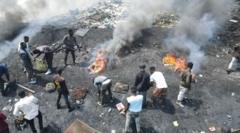
The air is thick with smog, and the ground is littered with the remnants of discarded technology at the Agbogbloshie dumpsite in Accra, Ghana. Here, untrained laborers can be seen gathering and burning old televisions, computers, and cables to extract valuable metals like gold and copper. This dire situation highlights the grim reality of illegal e-waste trafficking that sees electronic waste from affluent countries dumped in poorer nations.The workers, including Abdulla Yakubu, endure grueling conditions. "I don’t feel well," he confesses, battling eye irritation and breathing difficulties amidst the hazardous fumes. Similarly, Abiba Alhassan, a mother of four, struggles while sorting plastic waste amid the toxic clouds of smoke. “It’s extremely difficult to breathe,” she laments. With an estimated 62 million tonnes of e-waste generated globally in 2022—a staggering increase of 82% since 2010—this waste category is rapidly becoming the world's most significant environmental concern. Electronic devices proliferate in our daily lives, fueling this alarming increase.A mere 15% of e-waste is currently recycled, with the rest often shipped off under the guise of reusable materials. Criminal organizations exploit gaps in waste management systems, particularly in developed countries where inadequate recycling infrastructure fails to cope with the growing e-waste volumes. Investigators reveal that e-waste has become the most commonly seized item, accounting for one in every six waste-related seizures globally.In recent years, sophisticated smuggling tactics have emerged, with traffickers grinding up e-waste and camouflaging it with other plastics to escape detection. Investigations at European ports have uncovered shocking realities as would-be shipments of vehicles conceal toxic waste within their containers.The haphazard management of toxic e-waste has dire consequences. Hazardous chemicals released during the burning process pose severe health risks to individuals, especially vulnerable groups like women and children who often take part in informal recycling without protective gear. Global efforts such as the Basel Convention, which will require exporters to declare e-waste from January 2025, aim to curb the trafficking and mitigate environmental and health hazards. However, some countries, including the US—a major exporter of e-waste—have not ratified this agreement. This has led to the creation of new smuggling routes, with increased shipments into places like Mexico.Despite the dangers, for many, particularly those in Agbogbloshie, the e-waste industry remains their only source of income. Abiba refers to her struggle, spending almost half of her earnings on medical expenses related to her work at the dump. She states matter-of-factly, “I am still here because this is my means of survival and that of my family.” Meanwhile, the challenges posed by e-waste trafficking continue to grow, calling for urgent action from governments and communities alike to address this toxic trade.


