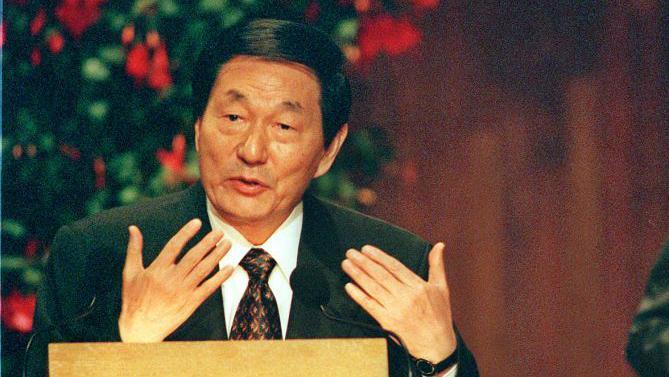
Former Chinese Premier Zhu Rongji, who helped turn China into a trading giant, has died at the age of 97.
Zhu served as China’s second‑highest office holder from 1998 to 2003, pushing the country into the World Trade Organization and opening its factories to the global market.
He was instrumental in shifting local tax powers to the central government, privatising unprofitable state enterprises, and championing home ownership. During his premiership, China’s economy grew at double‑digit rates and foreign investment surged, though the reforms also led to significant layoffs and heightened inequality.
Zhu was known for his blunt style, calling out corruption, “half‑wits” bankers, and even describing Yangtze River flood control as “flimsy and porous” in the 1990s. State media praised him as an “outstanding member” of the Party and a loyal Communist fighter, a figure who could be described as “revolution, struggle and brilliance.”
Born in Hunan Province in 1928, Zhu earned an electrical engineering degree before joining the civil service. He was purged twice—first for accusing Mao of irrational economics and then during the Cultural Revolution—before returning to office after Mao’s death.
Zhu’s death is mourned by a generation that remembers him as a tough, pragmatic leader who steered China from a Communist outsider to a global manufacturing powerhouse.