In brief
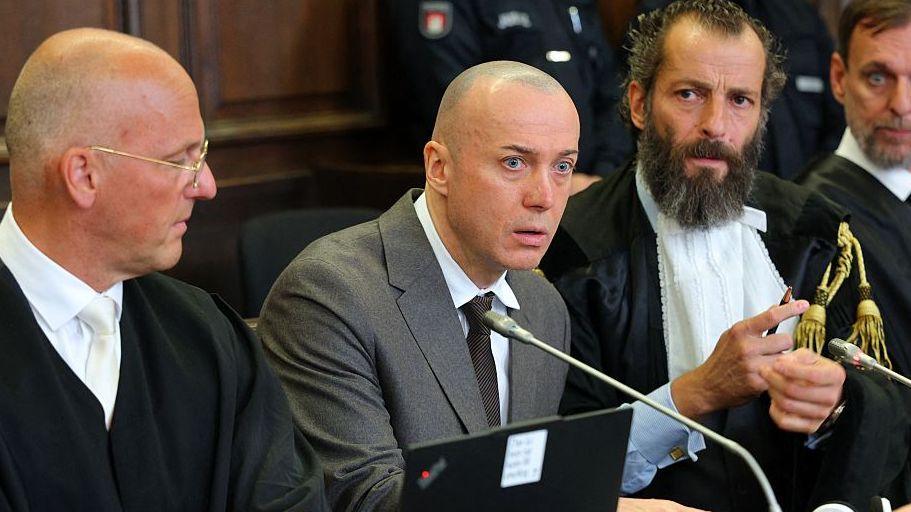
Serhii Kuznetsov, a 50‑year‑old Ukrainian officer, sits in a Hamburg courtroom accused of leading a team that detonated three of the four Nord Stream pipelines in September 2022. Prosecutors allege he ordered divers and an explosives expert to carry out the attack, labeling it a war crime. Despite his personal attorney claiming no solid evidence and questioning extradition procedures, the German court has accepted the case under its jurisdiction. The trial occurs against a backdrop of a complex legal maze that includes extradition challenges in Italy, Poland, and Croatia, and political tensions between Kyiv and Berlin. As the proceedings unfold, the outcome could set a precedent for how nations confront covert sabotage against critical infrastructure.
A packed court in Hamburg has opened a courtroom to a 50‑year‑old Ukrainian soldier, Serhii Kuznetsov, who stands accused of orchestrating the 2022 destruction of three of the four Nord Stream gas pipelines that run beneath the Baltic Sea.
The prosecution claims Kuznetsov headed a team of deep‑sea divers, a boat captain and an explosives officer who planted under‑water charges that exploded on 26 September 2022. They argue the act amounts to a war crime – an attack on civilian infrastructure carried out by military means.
Kuznetsov’s defence has demanded dismissal of the case, arguing that the investigation is purely circumstantial, with no witnesses, DNA, fingerprints or forensic links. They also contend that critical details about his extradition were omitted, undermining the legality of the transfer from Italy and violating his right to a fair trial.
The trial sits at the intersection of a tangled international legal web. Kuznetsov was arrested in Italy in August 2025 under a European arrest warrant, after a hotel check‑in near Rimini triggered police action. The Italian Supreme Court later claimed the extradition was permissible, yet the German High Court has declared the case under German jurisdiction, citing threats to internal security.
A second suspect, Volodymyr Zhuravlov, was freed by a Polish court the previous year, which held that an armed mission to sabotage the pipeline could be deemed justified. He has since been re‑arrested in Croatia on related allegations and is awaiting extradition to Germany, potentially linking his case to Kuznetsov’s hearing.
Amid fierce political debate, Ukraine’s parliament suggests the blasts were tied to anti‑Russian strategy, while Germany insists the court will keep the matter strictly legal, removing it from the sphere of political maneuvering.
Witnesses in the courtroom never entered, and the proceedings have been heavily guarded. The trial is being closely watched not only by the powers directly involved – Ukraine, Germany, Russia and the wider EU – but also by global markets dependent on European energy security.