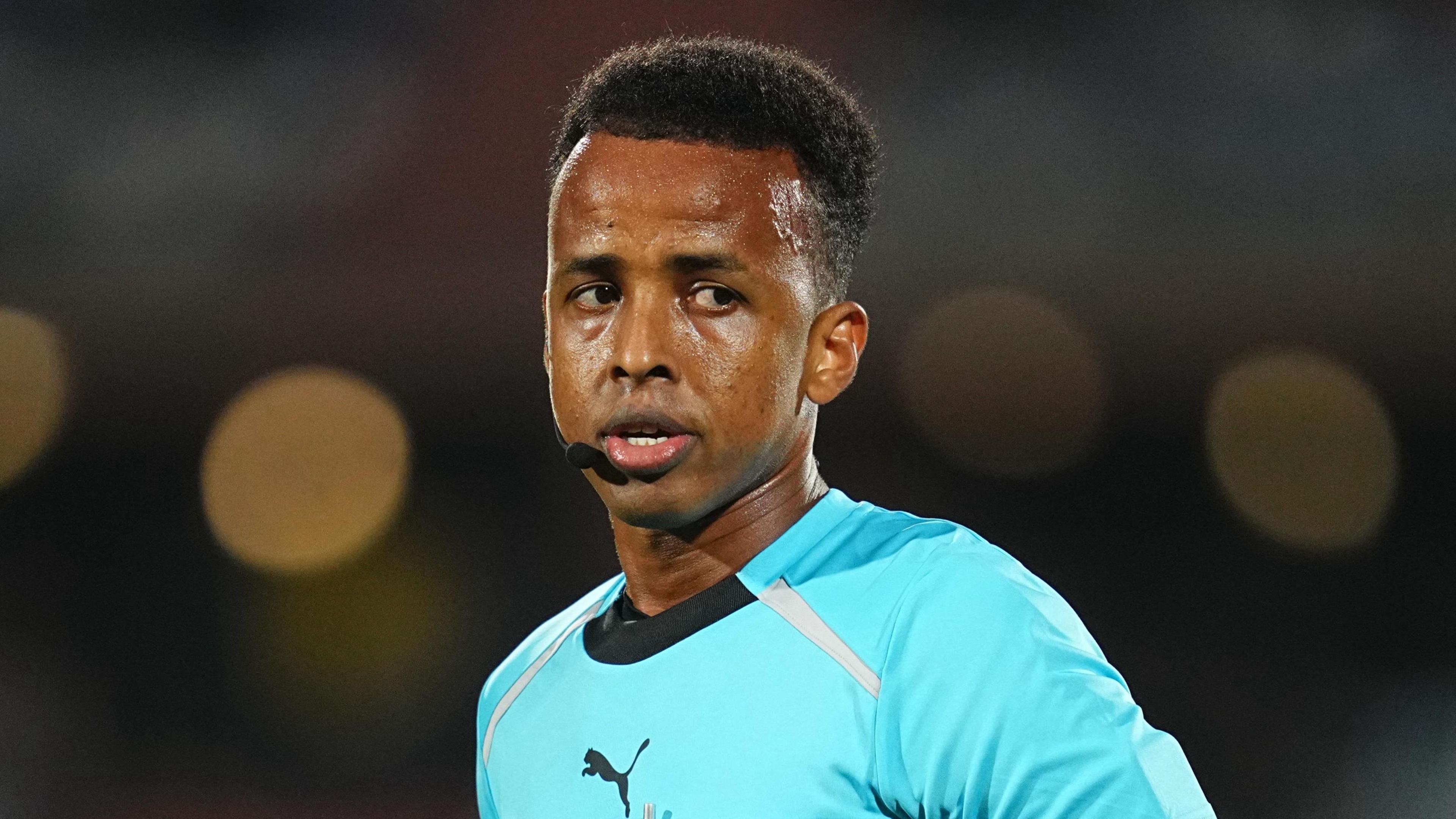
Somali referee Omar Abdulkadir Artan, who carried a diplomatic passport and a single‑entry visa, was denied entry to the United States on Monday at Miami International Airport.
A U.S. Customs and Border Protection source said that, following a routine immigration interview, “derogatory information, including association with suspected members of terror organisations”, was found, making Artan ineligible for admission under the Immigration and Nationality Act (INA). The traveler was given expedited removal forms and was later released to travel to Istanbul, Turkey.
Artan was set to become the first Somali referee to officiate at a World Cup finals. He had been selected as one of 52 referees for the 2026 tournament and had previously been named CAF men's referee of the year in 2025.
After returning to Somalia, Artan was welcomed by government officials, members of the Somali Football Federation, and local residents before meeting President Hassan Sheikh Mohamud at the Presidential Palace. He held a brief press conference at Aden Adde International Airport, expressing gratitude for the support he had received and reaffirming his commitment to debut at the 2030 World Cup.
FIFA has expressed support for Artan, noting that its officials remained in contact with him leading up to his arrival in Mogadishu. However, the U.S. travel ban, which was introduced during the Trump administration and targets 12 countries including Somalia, has made it impossible for him to travel to the U.S. to supervise matches that will be based in Florida.
The incident has raised questions about the intersection of sports and politics, as well as the broader implications of travel restrictions on professional athletes and officials from politically turbulent regions.